

Building defects remain a concern for property developers in Victoria, particularly following the establishment of the Building and Plumbing Commission in 2024. This new regulator merged the Building and Plumbing Commission, Domestic Building Dispute Resolution Victoria, and the domestic building insurance functions into a single oversight body with expanded powers to address defect-related issues. Understanding who is liable for building defects in Victoria, the statutory timeframes for claims, and the dispute resolution pathways available through the Building and Plumbing Commission could impact project risk management and financial exposure.
Recent reforms have strengthened consumer protections and enforcement mechanisms, creating new compliance obligations for developers. The Building Statement outlines an 18-month program to further reform Victoria’s building system, with enhanced rectification powers and quality control measures that may affect project delivery and defect liability periods.
This guide examines the regulatory framework governing building defects, the practical aspects of building defect identification and inspection, and the dispute resolution processes now managed by the Building and Plumbing Commission. It covers statutory warranties, limitation periods for building defects in Victoria, insurance requirements, and the contractual arrangements that define defect responsibilities between parties involved in residential development projects.
Understanding Building Defects in Victoria
Building defects in Victoria are governed by specific legislative frameworks that define liability periods, warranty obligations, and consumer protections. Property developers may benefit from understanding the distinction between major structural defects and minor non-structural issues, as these classifications carry different warranty periods and legal implications.
Definition of Building Defects
Building defects refer to faults or deficiencies in construction work that fail to meet required standards under the Building Act 1993 or the National Construction Code. These defects may arise from poor workmanship, inadequate materials, design flaws, or failure to comply with building regulations.
Defects can manifest during construction or become apparent years after project completion. They range from cosmetic issues like paint defects to problems affecting structural integrity. The Building and Plumbing Commission (BPC), which replaced the Building and Plumbing Commission (BPC) and Domestic Building Dispute Resolution Victoria (DBDRV), now oversees defect matters and has powers to issue rectification orders directing builders and developers to fix substandard work.
For Melbourne property developers, understanding what constitutes a defect is relevant for managing liability and maintaining project quality standards.
Major Defects Versus Non-Structural Defects
Victoria’s Domestic Building Contracts Act 1995 distinguishes between two categories of defects with different liability timeframes. Major defects (also called structural defects) are defects in major structural elements that cause or could reasonably cause the building to be uninhabitable, unsafe, or not fit for its intended purpose.
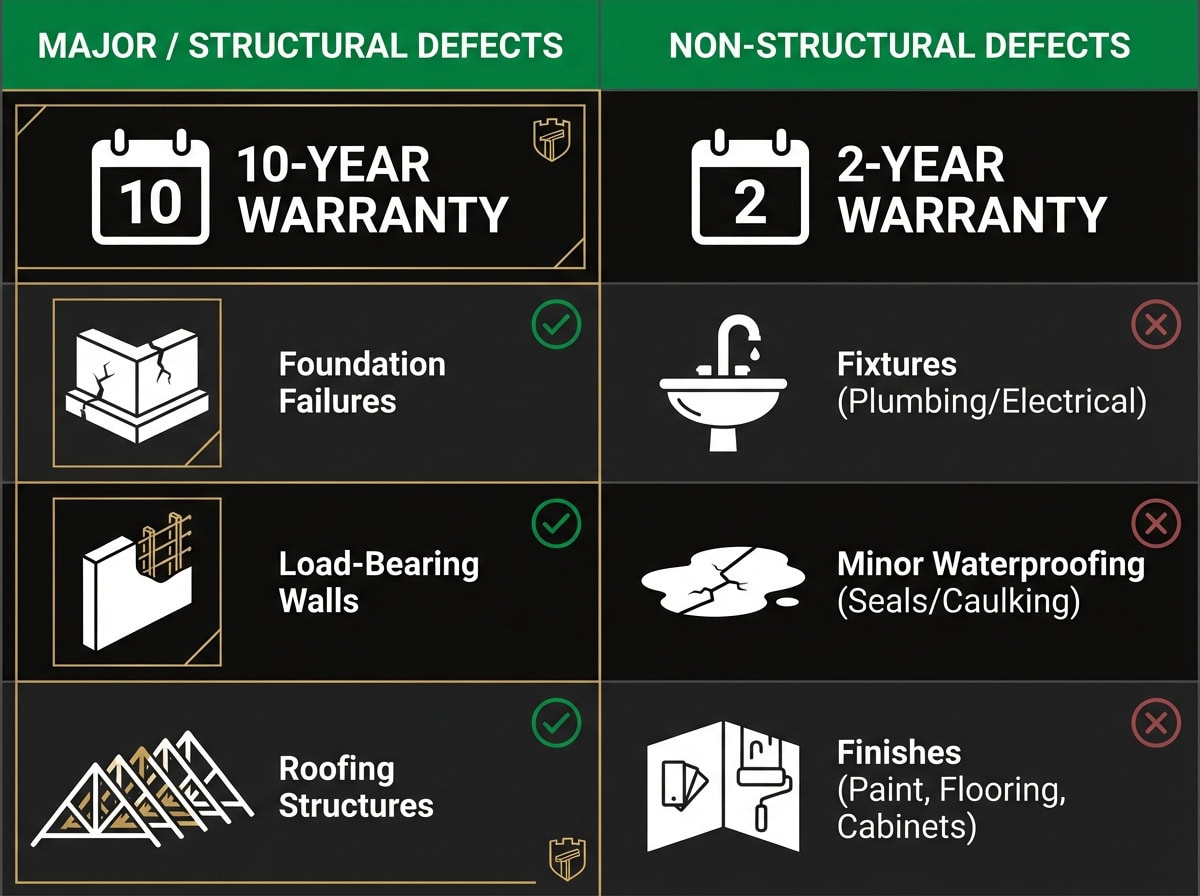
These structural defects include failures in load-bearing components, foundations, roofing structures, and external walls. Builders carry responsibility for major defects for 10 years from the completion date under statutory warranties.
Non-structural defects are minor defects that do not affect the building’s structural integrity. Examples include defective fixtures, minor waterproofing issues, or finish problems. The warranty period for non-structural defects extends for two years from completion.
Understanding these classifications helps developers assess risk exposure and implement appropriate quality control measures during the defects liability period.
Statutory Warranties and Consumer Rights
All domestic building contracts in Victoria automatically include statutory warranties under the Domestic Building Contracts Act 1995, regardless of whether they are explicitly written into agreements. These warranties cannot be excluded or modified by contract terms.
The statutory warranties cover several aspects including that the work will be performed in a proper and workmanlike manner, materials will be suitable and new unless otherwise specified, and the work will comply with all relevant building regulations and planning permits. The building will be reasonably fit for its intended purpose and completed within a reasonable time.
Australian Consumer Law provides additional protections for consumers through guarantees that goods and services meet acceptable quality standards. Property developers may note that these warranties apply even in commercial contexts where residential units are being constructed.
The BPC handles disputes relating to these warranties and can facilitate resolution between parties before matters escalate to the Victorian Civil and Administrative Tribunal (VCAT). Developers typically manage warranty claims through defects liability periods specified in their construction contracts, which run concurrently with statutory timeframes.
Common Types of Building Defects
Building defects in Victoria typically fall into three main categories: structural problems that compromise safety, water infiltration issues particularly through roofing systems, and failures in materials or construction quality. These defects can emerge during construction or manifest years later, making early detection through professional inspection relevant.
Structural Issues and Safety Risks
Structural defects represent the most serious category of building problems. These issues affect the stability and safety of a property.
Foundation movement and settlement commonly occur in Melbourne properties due to reactive clay soils. Cracks in walls, floors, and ceilings may indicate underlying foundation problems. These defects require attention as they can worsen over time.
Load-bearing wall failures pose risks to building integrity. Inadequate support beams, incorrect spacing of structural elements, or unauthorised removal of walls can compromise the entire structure. Property developers may benefit from building inspection reports that identify these issues before settlement.
Floor sagging and timber defects also fall under structural concerns. Poor subfloor ventilation, termite damage, or inadequate joist sizing can lead to unsafe living conditions. Victoria’s Domestic Building Contracts Act 1995 provides coverage for major defects for up to 10 years.
Water Damage and Roof Leaks
Water penetration creates damage to Victorian properties. Roof leaks rank among the most frequently identified defects during professional inspections.
Faulty roof installations, damaged flashing, or deteriorated seals around penetrations allow water entry. Melbourne’s climate intensifies these problems through thermal expansion and contraction cycles. Guttering and downpipe failures compound water damage risks.
Common water infiltration points include:
- Improperly sealed windows and doors
- Failed waterproofing in wet areas
- Cracked render or cladding
- Poorly installed roof tiles or sheets
- Inadequate drainage systems
Wet area waterproofing failures in bathrooms and laundries create hidden damage. Water seeps into walls and floors, causing structural timber decay and mould growth. These defects may not become apparent until damage has occurred.
External cladding defects also contribute to water ingress. Incorrect installation, incompatible materials, or missing moisture barriers allow water to penetrate wall cavities.
Defective Materials and Workmanship
Poor workmanship and substandard materials account for numerous building defects across Victoria. These issues often emerge within the two-year minor defect warranty period.
Plumbing defects include leaking pipes, incorrect drainage falls, and inadequate venting. Poorly installed fixtures and fittings may fail prematurely. The Building and Plumbing Commission now oversees these matters, having absorbed the functions of the Building and Plumbing Commission and Domestic Building Dispute Resolution Victoria.
Electrical installation errors pose safety hazards and compliance issues. Inadequate earthing, overloaded circuits, or non-compliant switchboard installations require rectification. Professional inspections typically verify compliance with current Australian Standards.
Material and workmanship defects commonly include:
| Defect Type | Typical Issues | Warranty Period |
|---|---|---|
| Masonry | Cracked brickwork, poor mortar joints, inadequate ties | 2-10 years depending on severity |
| Carpentry | Poorly fitted doors, warped frames, inadequate fixings | 2 years (non-structural) |
| Finishes | Uneven rendering, paint defects, tiling failures | 2 years (non-structural) |
| Insulation | Gaps in coverage, incorrect R-values, moisture damage | 2 years (non-structural) |
Builders remain responsible for rectifying these defects during warranty periods. Property developers may consider documenting all defects promptly and engaging qualified professionals to assess their severity and required remediation.
Building Contracts and Legal Obligations
In Victoria, domestic building contracts are required to meet specific legislative requirements, include mandatory insurance provisions, and comply with Australian Standards and building regulations. The Domestic Building Contracts Act 1995 establishes the framework for these obligations, which apply to most residential projects over a prescribed value.
Domestic Building Contract Requirements
The Domestic Building Contracts Act 1995 mandates specific requirements for building contracts in Victoria. Any domestic building work valued over $10,000 is required to be in writing and include particular terms to be legally enforceable.
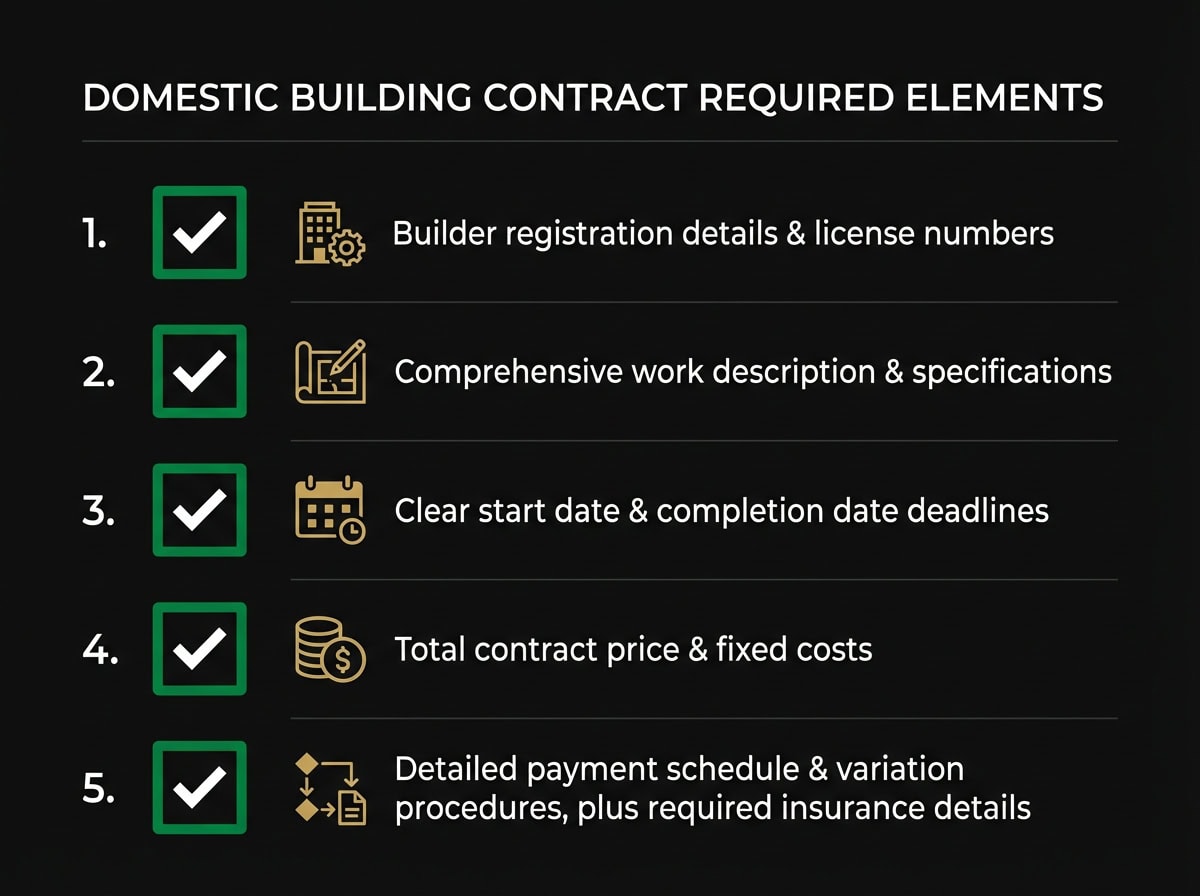
A valid domestic building contract typically contains:
- The builder’s registration details and licence number
- A detailed description of the work to be performed
- Start and completion dates
- The contract price or method of calculating it
- Payment terms and schedule
- Variation procedures
- Insurance details
Builders are required to adhere to specific rules when addressing defects. The contract typically establishes the defects liability period, though statutory warranties under the Act provide protection beyond contractual terms. These statutory warranties cannot be excluded or modified by contract terms.
Builders Warranty Insurance and Building Insurance
Builders warranty insurance is mandatory in Victoria for domestic building work valued over $16,000. The builder is required to arrange this insurance before commencing work, and it protects property owners if the builder dies, disappears, or becomes insolvent.
The insurance covers:
- Incomplete work due to builder insolvency or death
- Defective work within specified warranty periods
- Non-compliant work that fails to meet building standards
The Domestic Building Contracts Act 1995 establishes statutory warranty protections for homeowners. These include a 10-year period for major structural defects and a 2-year period for minor defects. The Building and Plumbing Commission now oversees domestic building insurance functions, previously managed by the Victorian Managed Insurance Authority.
Property developers may consider verifying that builders provide valid insurance certificates before work commences, as this forms a safeguard in the construction process.
Australian Standards and the National Construction Code
All building work in Victoria is required to comply with Australian Standards and the National Construction Code. These standards are referenced within the Building Act 1993 and become legally binding requirements.
The National Construction Code sets minimum requirements for:
- Structural integrity and stability
- Fire safety measures
- Health and amenity standards
- Energy efficiency provisions
- Accessibility requirements
Compliance with these standards is assessed through the planning permit and building permit process. Building surveyors verify that designs and construction methods meet the required standards before issuing building permits and occupancy certificates.
The Building and Plumbing Commission enforces compliance with these standards as part of its regulatory oversight. Non-compliance may result in enforcement actions, including rectification orders directing builders to fix defective work that fails to meet Australian Standards requirements.
Building Defect Identification and Inspection
Professional inspection and documentation play a role in identifying building defects early, protecting property developers from potential liability and ensuring compliance with Victorian building standards. Building inspection reports, conducted by qualified surveyors and structural engineers, provide the technical evidence needed to address defects during the liability period and obtain necessary certificates for occupancy.
Importance of Building Inspection Reports
A building inspection report is a technical assessment that documents construction defects, incomplete work, and building standard non-compliance issues. For Melbourne property developers, these reports may serve as evidence when addressing defects during the two-year minor defect period or ten-year major defect liability period.
Professional inspectors use specialised equipment and investigation methods to identify issues that may not be immediately visible. Reports typically include detailed measurements and photographs of each defect, making them valuable documentation for dispute resolution with builders or when pursuing claims through the Building and Plumbing Commission (BPC).
The timing of inspections matters. Pre-completion inspections allow developers to identify defects before final payment, whilst occupancy inspections provide baseline documentation for future reference. Independent inspections may also reveal structural issues, compliance concerns, and potential pest damage that could result in costly repairs if left unaddressed.
Role of Building Surveyors and Structural Engineers
Building surveyors and structural engineers provide distinct but complementary services in defect identification. A building surveyor assesses overall compliance with the National Construction Code and Victorian building regulations, whilst a structural engineer focuses specifically on structural integrity and load-bearing elements.
Structural engineers become particularly relevant when defects involve foundations, load-bearing walls, or structural frames. Their reports may be considered in legal proceedings and insurance claims, typically providing technical evidence for these matters. Building surveyors conduct broader assessments covering waterproofing, fire safety, ventilation, and general construction standards.
Both professionals are required to hold current registration in Victoria. The BPC, which replaced the Building and Plumbing Commission in 2025, now oversees practitioner registration and compliance. Developers may consider verifying credentials before engaging these professionals, as only reports from qualified practitioners satisfy the requirements under the Building Act 1993.
Certificates and Permits: Occupancy and Final Inspection
An occupancy permit cannot be issued until a building surveyor certifies that construction complies with the approved plans and building regulations. This certificate of final inspection represents the formal conclusion of the building process and typically requires resolution of any identified defects.
The occupancy permit allows the building to be legally occupied and marks a milestone in the defects liability timeline. From this date, the two-year minor defect period and ten-year major defect period commence. Developers may benefit from maintaining detailed records of the occupancy permit date, as these timeframes determine their ability to pursue defect claims.
Final inspections typically cover:
- Structural compliance with approved engineering specifications
- Fire safety systems including alarms, exits, and rated construction
- Waterproofing in wet areas and external envelope
- Essential safety measures as outlined in the building permit
Developers may encounter delays in obtaining certificates if defects are identified during final inspection. The building surveyor is required to be satisfied that all issues have been rectified before issuing documentation, which can impact project timelines and settlement dates for purchasers.
Legislation and Regulatory Framework
Victoria’s building defect framework operates under multiple pieces of legislation that establish standards, obligations, and dispute resolution processes. The Building Act 1993 sets technical requirements and compliance standards, while the Domestic Building Contracts Act 1995 governs contractual relationships between builders and property owners.
Building Act 1993 and Related Legislation
The Building Act 1993 forms the cornerstone of Victorian legislation governing construction standards and building quality. This Act establishes the legal framework for building permits, occupancy permits, and enforcement processes.
The Act adopts the National Construction Code, which sets minimum technical requirements for building work across Victoria. Building surveyors operate under this framework to assess compliance before issuing permits and certificates of occupancy.
Recent reforms through the Building Legislation Amendment (Buyer Protections) Act 2025 introduced changes to Victoria’s building regulatory framework effective from 1 July 2026. These reforms include:
- Developer bond schemes for larger projects
- Enhanced rectification powers
- Strengthened compliance processes
- Streamlined dispute resolution pathways
The Building Regulations 2018 contain detailed requirements for building permits, inspections, and maintenance obligations. These regulations work alongside Victorian planning schemes to govern the development and construction process.
Domestic Building Contracts Act 1995
The Domestic Building Contracts Act 1995 regulates contracts for residential building work valued over specified thresholds. This legislation mandates specific contract terms, warranty periods, and builder obligations for domestic projects.
Key requirements include:
- Mandatory contract terms and conditions
- Statutory warranty periods for defects
- Insurance requirements for domestic building work
- Rights to terminate contracts in specific circumstances
The Act provides property developers with statutory warranties that cannot be excluded by contract. These warranties typically cover defects in workmanship and materials for periods ranging from 6 to 10 years depending on the nature of the defect.
Consumer Affairs Victoria administers this Act and provides guidance on building defects, delays and disputes that arise under domestic building contracts.
Role of Regulatory Authorities
The Building and Plumbing Commission replaced the Building and Plumbing Commission, Domestic Building Dispute Resolution Victoria, and VMIA’s domestic building insurance functions in a streamlined regulatory structure. This consolidation brings all building quality control functions under one authority.
The Commission holds expanded enforcement powers including the ability to issue rectification orders directing builders and developers to fix defective work. These orders may be issued after occupancy permits are granted, extending regulatory oversight beyond the construction phase.
The regulator maintains registers of licensed practitioners, investigates complaints, and takes enforcement action against non-compliant builders. Property developers dealing with building defects may engage with the Commission through its compliance, dispute resolution, or insurance functions depending on the circumstances.
Dispute Resolution and Remedies
Victoria provides structured pathways for resolving building defects through the Building and Plumbing Commission, which consolidated the former Building and Plumbing Commission, Domestic Building Dispute Resolution Victoria, and domestic building insurance functions into a single regulator. Property developers facing defect claims can access mediation services and tribunal processes designed to resolve disputes efficiently.
Steps to Resolve a Building Dispute
When defects arise in domestic building projects, property developers typically follow a systematic approach to resolution. The first step involves direct negotiation with the affected party to understand the specific concerns and assess whether defects exist.
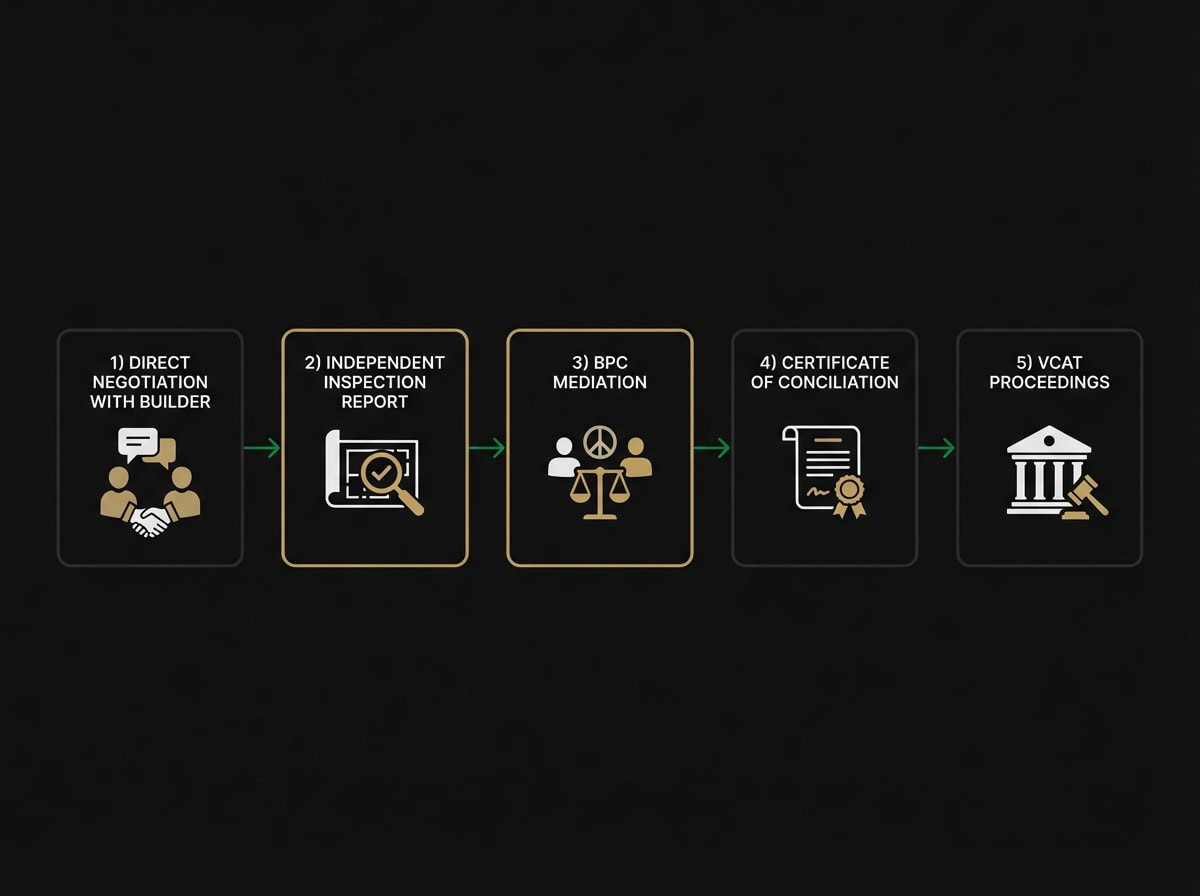
Obtaining an independent building inspection report can verify claims and provide technical evidence of any defects present. This documentation becomes relevant for subsequent resolution processes.
If direct negotiation fails, Consumer Affairs Victoria provides guidance on handling building disputes including delays and suspected defects. The Building and Plumbing Commission now oversees dispute resolution services that were previously managed by DBDRV.
Key dispute resolution steps include:
- Direct communication with the other party
- Engaging independent building experts
- Gathering evidence and documentation
- Seeking mediation through the Building and Plumbing Commission
- Proceeding to VCAT if mediation fails
Domestic Building Dispute Resolution Victoria (DBDRV)
DBDRV formerly provided free mediation services for domestic building disputes before merging into the Building and Plumbing Commission. The dispute resolution function continues under the BPC’s oversight with enhanced powers.
The BPC’s dispute resolution process facilitates agreements between builders and property owners through structured mediation. Most issues relating to defects, incomplete work, or contractual disputes are eligible for this service.
Property developers may note that mediation typically requires an independent building inspection report to verify disputed matters. The process aims to reach binding agreements without tribunal proceedings.
When disputes cannot be resolved through mediation, the BPC issues a Certificate of Conciliation. This certificate permits parties to escalate matters to VCAT while maintaining a record of attempted resolution.
Victorian Civil and Administrative Tribunal (VCAT)
VCAT provides the next level of dispute resolution when mediation through the Building and Plumbing Commission proves unsuccessful. The tribunal has jurisdiction over domestic building defects disputes and can issue binding orders.
A dispute resolution order issued by VCAT against a builder may require them to rectify defective building work or complete construction according to contract specifications. These orders carry legal weight and can include requirements to repair damage caused during construction.
Building owners can seek VCAT review if a breach notice is issued. Property developers involved in disputes may benefit from preparing evidence including expert reports, contracts, and correspondence documenting the dispute history.
VCAT proceedings are more formal than mediation but remain less costly and time-consuming than Supreme Court litigation. The tribunal’s specialised building division understands technical building matters and industry standards.
Owners Corporations and Common Property Disputes
Defects affecting common property in multi-unit developments require different dispute resolution approaches. Owners corporations are required to identify whether defects exist within common property areas before pursuing claims against builders or developers.
Expert evidence confirming originating defects within common property may be obtained before placing the responsible party on notice. This typically involves engaging building consultants to assess structural elements, waterproofing, and shared facilities.
Owners corporations may be eligible to make applications to the Building and Plumbing Commission’s dispute resolution service. The process follows similar steps to individual building disputes but requires committee approval and proper mandate from lot owners.
Property developers delivering multi-unit projects may consider maintaining detailed defect records and responding promptly to owners corporation claims. Early resolution of common property defects may prevent escalation to tribunal proceedings and reduce potential liability exposure.
Limitation Periods, Insurance, and Ongoing Responsibilities
Property developers in Victoria face specific timeframes for addressing building defects, and these periods vary depending on the defect type and applicable legislation. Understanding these limitation periods and insurance requirements is relevant for managing risk and ensuring compliance with Victorian building regulations.
Time Limits for Claims and Limitation Periods
Victoria operates under multiple limitation frameworks that may apply to building defect claims. Under the Domestic Building Contracts Act 1995, statutory warranties cover minor defects for 2 years and major defects for 10 years.
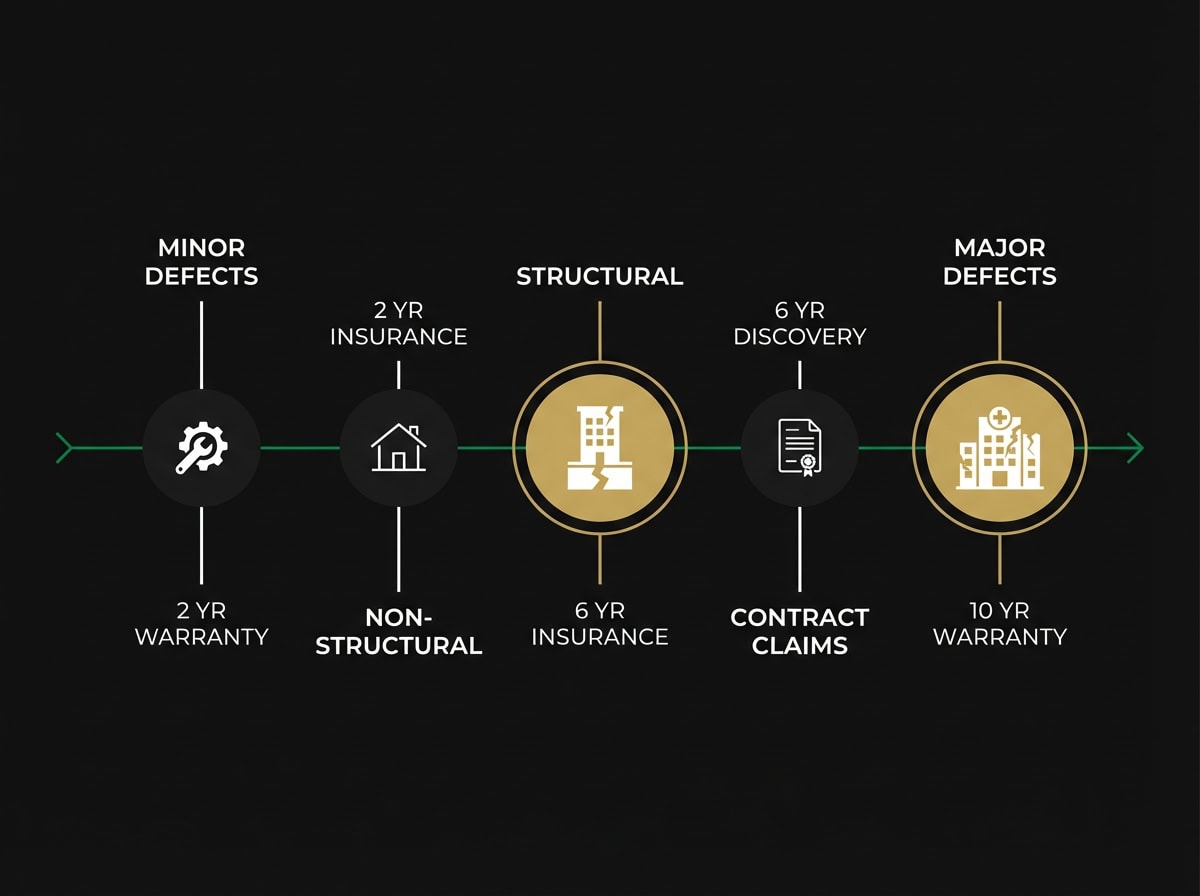
Domestic building insurance operates on different timeframes: two years from completion of building work for non-structural defects, and six years for structural defects. This insurance is mandatory in Victoria for most domestic building contracts valued at $16,000 or more.
The defects liability period in construction contracts typically commences after handover and varies based on contractual terms between parties. Missing these deadlines could mean losing the ability to recover rectification costs entirely.
The Building and Plumbing Commission (BPC), which consolidated the Building and Plumbing Commission, Domestic Building Dispute Resolution Victoria, and the VMIA’s domestic building insurance functions, now oversees these timeframes and enforcement.
Domestic Building Insurance and Ongoing Obligations
Domestic building insurance (also called builders warranty insurance) provides protection even after the builder has ceased operations, retired, or stopped plumbing work. This coverage ensures developers and property owners maintain recourse for defects discovered within applicable timeframes.
Property developers are required to ensure their builders hold valid domestic building insurance for contracts exceeding $16,000. Liability for building defects may extend to builders, subcontractors, architects, engineers, and surveyors, each carrying different responsibilities under Victorian legislation.
The BPC now administers building insurance claims and has introduced new powers including rectification orders to direct builders and developers to fix substandard work. Developers may benefit from maintaining documentation throughout the construction process to support potential claims within applicable limitation periods.
Professional Assistance and Resources
Property developers experiencing building defects or navigating limitation periods may contact the Building and Plumbing Commission for regulatory guidance. The BPC consolidates previously separate functions into a streamlined watchdog for consumers and industry participants.
For complex defect claims or disputes, developers typically engage construction lawyers who specialise in Victorian building legislation. Professional architectural services can provide expert assessments of building defects and documentation to support claims within required timeframes.
Early identification and documentation of defects is relevant, as the defects liability period represents a phase where building defects can emerge and rectification rights remain enforceable. Developers may consider establishing clear protocols for defect identification and reporting during and after construction completion.
Frequently Asked Questions
Property owners and developers in Victoria face specific timeframes, processes and protections when dealing with building defects. The Building and Plumbing Commission now oversees regulation, insurance and dispute resolution functions previously managed by separate entities.
What are the common signs that indicate a building defect in a property?
Visible cracking in walls, ceilings or foundations often indicates structural movement or settlement issues. Water stains, dampness or mould growth typically point to waterproofing failures or inadequate drainage. Doors and windows that fail to close properly may signal framing defects or moisture penetration. Common defects include structural issues (foundation movement, load-bearing failures), water damage (roof leaks, failed waterproofing), and workmanship problems (plumbing leaks, electrical non-compliance). See the Common Types of Building Defects section above for detailed examples.
How do I report a building defect discovered in a newly-constructed property in Victoria?
Property owners typically document the defect with photographs and written descriptions, then notify the builder in writing requesting rectification. If the builder fails to respond, complaints may be lodged with the Building and Plumbing Commission. The dispute resolution process begins with direct negotiation, followed by BPC mediation if needed, and may progress to VCAT for formal determination. The BPC now handles building defects, delays and disputes. See the Dispute Resolution section above for the full process.
What is the process for resolving disputes over building defects with a builder or developer in Victoria?
The dispute resolution process typically begins with direct negotiation between parties. If this fails, the Building and Plumbing Commission’s dispute resolution service may facilitate conciliation. Matters that cannot be resolved may progress to VCAT for formal determination. Key steps include documenting defects with independent inspection reports, notifying the builder in writing, seeking BPC mediation, and proceeding to VCAT if conciliation fails. See the Dispute Resolution and Remedies section above for detailed steps.
What warranties and protections do homeowners have regarding building defects in Victoria?
The Domestic Building Contracts Act 1995 provides statutory warranties covering defective workmanship and unsuitable materials. Builders remain liable for minor defects for two years and major defects for 10 years. Domestic building insurance protects property owners if the builder becomes insolvent. These warranties apply automatically to all domestic building contracts and cannot be excluded. Australian Consumer Law provides additional guarantees for acceptable quality standards. See the Understanding Building Defects section above for full details.
How long do I have to make a building defect claim in Victoria after noticing the issue?
Limitation periods depend on the claim type. Contract-based claims typically have six years from when the defect becomes apparent. Statutory warranty claims run from completion: two years for minor defects, 10 years for major structural defects. Domestic building insurance covers non-structural defects for 2 years and structural defects for 6 years. Missing these deadlines may mean losing the ability to recover rectification costs. See the Limitation Periods section above for specific timeframes and considerations.
What roles do the Building and Plumbing Commission and Consumer Affairs Victoria play in addressing building defects?
The Building and Plumbing Commission merged into the Building and Plumbing Commission in 2024, which now serves as the primary regulator with expanded powers to issue rectification orders. The BPC consolidated the BPC, Domestic Building Dispute Resolution Victoria, and domestic building insurance functions into a single oversight body. Consumer Affairs Victoria continues to provide information about consumer rights in building matters. The BPC handles compliance, dispute resolution, and insurance functions for building defects. See the Legislation and Regulatory Framework section above for details on the BPC’s functions.
Disclaimer: This article provides general information about building defects in Victoria and should not be relied upon as legal or professional advice. Building defect matters involve complex legislation and individual circumstances. SQM Architects (ABN 32 600 928 390, ARBV Reg. No. 51498) recommends consulting qualified legal practitioners and building professionals for advice specific to your situation.
