A plan of subdivision is a formal surveyed document that legally divides land into separate titles or consolidates multiple parcels in Victoria. Clause 56 of the Victoria Planning Provisions applies to all planning schemes in Victoria and sets out the requirements for residential subdivision, governing everything from initial application to final registration. Developers and property owners need to navigate council requirements, planning permits, and surveyor specifications before Land Use Victoria can register their subdivision.
The process involves multiple stages and stakeholders, from architects and surveyors to planning authorities and building inspectors. Recent updates for 2025-26 have refined certain requirements that developers must address. This guide outlines the essential steps and current standards that apply to subdivision projects across Victoria.
Understanding the subdivision framework helps developers avoid delays and ensure compliance with regulations. The requirements cover building envelopes, easements, restrictions, and documentation standards under the Subdivision Act 1988. Proper planning from the outset streamlines approval and registration timelines. For comprehensive guidance on the complete subdivision process, refer to our detailed guide on how to subdivide land in Victoria.
Retaining Existing Buildings During Subdivision
When preparing a plan of subdivision in Victoria, property owners may retain certain existing structures rather than demolishing and rebuilding. This approach can reduce costs and expedite the subdivision process when buildings meet current standards.
Existing dwellings that comply with building codes and zoning requirements often qualify for retention. The structures must align with the proposed lot boundaries and setback requirements outlined in local planning schemes.
Key considerations include:
- Building condition and structural integrity
- Compliance with current building regulations
- Alignment with proposed lot boundaries
- Access to essential services for each new lot
- Fire safety and egress requirements
Council permits typically require building inspections to verify that retained structures meet regulatory standards. Property owners should engage qualified building inspectors early in the planning phase.
Planning permits for subdivision may specify conditions for existing buildings, including required upgrades or modifications. These conditions must be satisfied before the plan receives final approval from Land Use Victoria.
Shared walls and services between proposed lots require easements or owners corporation arrangements. The subdivision plan must clearly document these shared elements and establish legal frameworks for their ongoing management. For properties requiring strata title arrangements in Victoria, additional documentation and governance structures apply.
Retaining effective structures reduces waste and preserves neighbourhood character while meeting subdivision objectives. However, modifications to existing buildings must still comply with the Building Act and relevant Australian Standards. Licensed surveyors incorporate existing structures into cadastral plans when preparing subdivision documentation.
2025-26 Legislative Updates Affecting Subdivision
Victoria’s planning framework will change again under the Planning Amendment (Better Decisions Made Faster) Act 2026, which does not commence before 29 October 2027. That legislation modernises the Planning and Environment Act 1987 and introduces new requirements for subdivision applications.
The Bill introduces exempt VPP amendments as a new category within the Victoria Planning Provisions. These amendments can be determined under section 4K(3) and may affect how certain subdivision applications are processed.
Property owners must now consider planning strategies for areas covered by planning schemes. This requirement is defined under section 6C and applies to subdivision proposals across Victoria.
The reforms aim to streamline decision-making processes while maintaining regulatory standards. Applicants should review how these changes impact their specific subdivision requirements, particularly when preparing documentation for council submission. Understanding planning permit timelines in Melbourne helps developers plan project schedules effectively.
Key changes affecting plans of subdivision include:
- Modified timeframes for council decisions
- Updated requirements for planning permit applications
- New provisions for VPP amendments
- Enhanced planning strategy considerations
These updates complement existing requirements under Clause 56 of the Victoria Planning Provisions, which continues to set out residential subdivision standards. The clause remains supported by complementary planning policy and relevant zones and overlays.
Surveyors, developers, and homeowners should familiarise themselves with these legislative changes before lodging new subdivision applications. The reforms became active in 2025 and apply to current subdivision processes throughout Victoria.
Developer Identification and Documentation Requirements
The plan of subdivision in Victoria requires clear developer identification from start to finish. Every document submitted must consistently name the developer or applicant responsible for the subdivision project.
Key Elements to Maintain:
- Developer’s full legal name on all application forms
- Consistent ABN or ACN references across documents
- Matching signatures on certifications and declarations
- Proper authorisation letters if using representatives
The developer’s details must align across planning permit applications, plans lodged with the Registrar, and all supporting documentation. Inconsistencies in naming or entity structure can delay processing or result in rejected submissions.
When multiple parties are involved, the primary developer must be clearly identified. Joint ventures should specify which entity holds primary responsibility for the subdivision obligations.
Documentation Checklist:
| Document Type | Required Developer Information |
|---|---|
| Planning Permit | Full legal name and contact details |
| Subdivision Plan | Developer name matching title documents |
| Certificates | authorised signatory details |
| Correspondence | Consistent entity references |
Professional representatives such as surveyors or planners can submit documents on behalf of developers. However, authorisation must be explicit and documented. The developer remains legally responsible for all requirements under Victorian subdivision regulations regardless of who prepares or lodges the documents.
Changes to developer details during the subdivision process require formal notification to both the relevant council and Land Use Victoria. This ensures continuity in record-keeping and legal accountability throughout the approval stages.
Get the 7-point site check to run before committing to a permit application — zoning, overlays, setbacks and council red flags, in plain English. Free PDF, instant download.
- Zone, overlay & setback checks
- What council assesses first
- Permit-readiness red flags
Something went wrong. Please try again.
No spam. Unsubscribe anytime.
Check your inbox — your checklist is on its way.
Frequently Asked Questions
Property owners in Victoria must obtain a planning permit before subdividing land, prepare specific documentation for registration, and navigate approval processes that involve multiple authorities and regulatory requirements.
What documents are necessary for submitting a Plan of Subdivision application in Victoria?
The primary document required is a certified plan of subdivision prepared by a licensed land surveyor. This plan must comply with the Subdivision (Registrar’s Requirements) Regulations 2021, which outline the specific information that must be included.
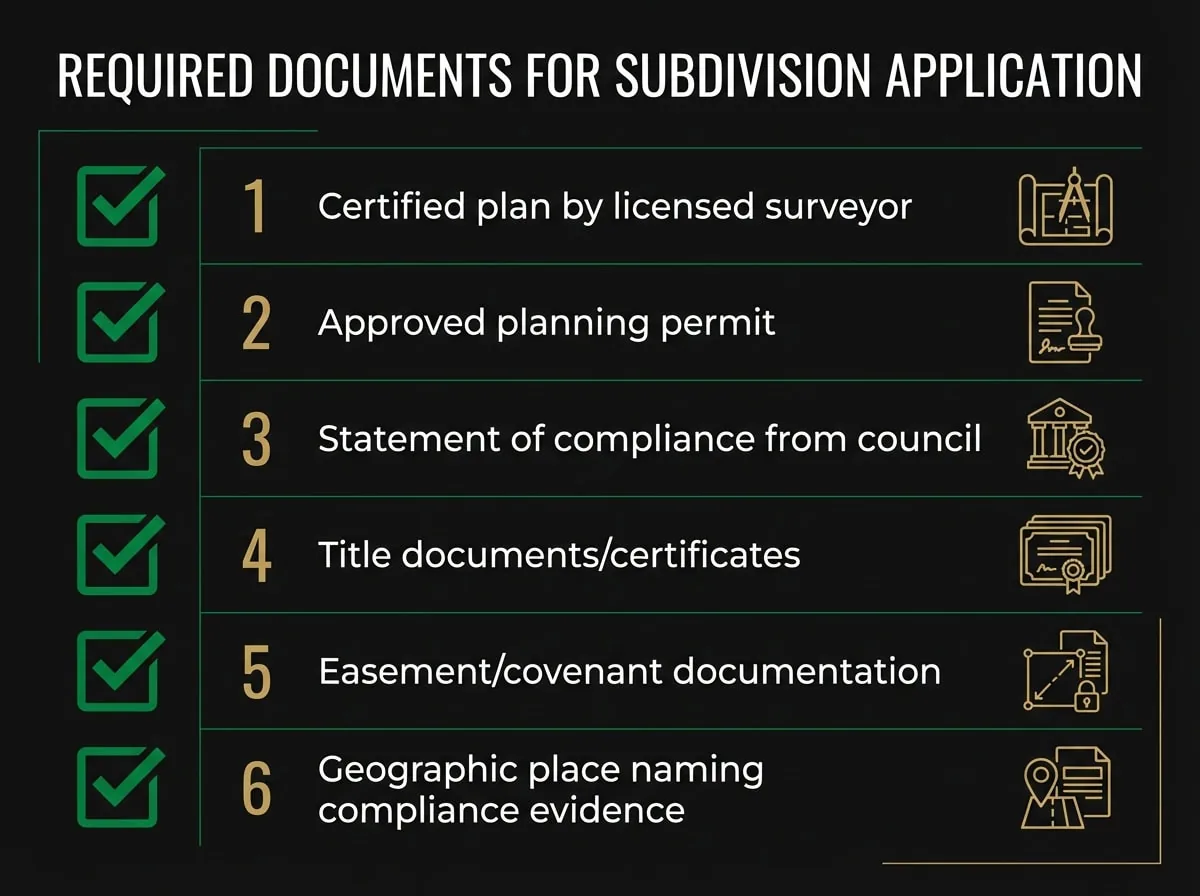
A planning permit approved by the relevant council forms the foundation of the application. Without this permit, the subdivision cannot proceed to the registration stage.
The application requires a statement of compliance from the responsible authority confirming all permit conditions have been met. This statement verifies that infrastructure works, easements, and other obligations have been completed according to the approved conditions.
Title documents, certificates of title, and any existing easement or covenant documentation must be provided. The Registrar also requires evidence of compliance with geographic place naming standards and proper identification of any owners corporation if applicable.
Can you outline the approval process for a Plan of Subdivision in Victoria?
The subdivision process begins with obtaining a planning permit from the local council or responsible authority. The applicant submits plans and supporting documentation demonstrating compliance with planning scheme requirements and zoning provisions.
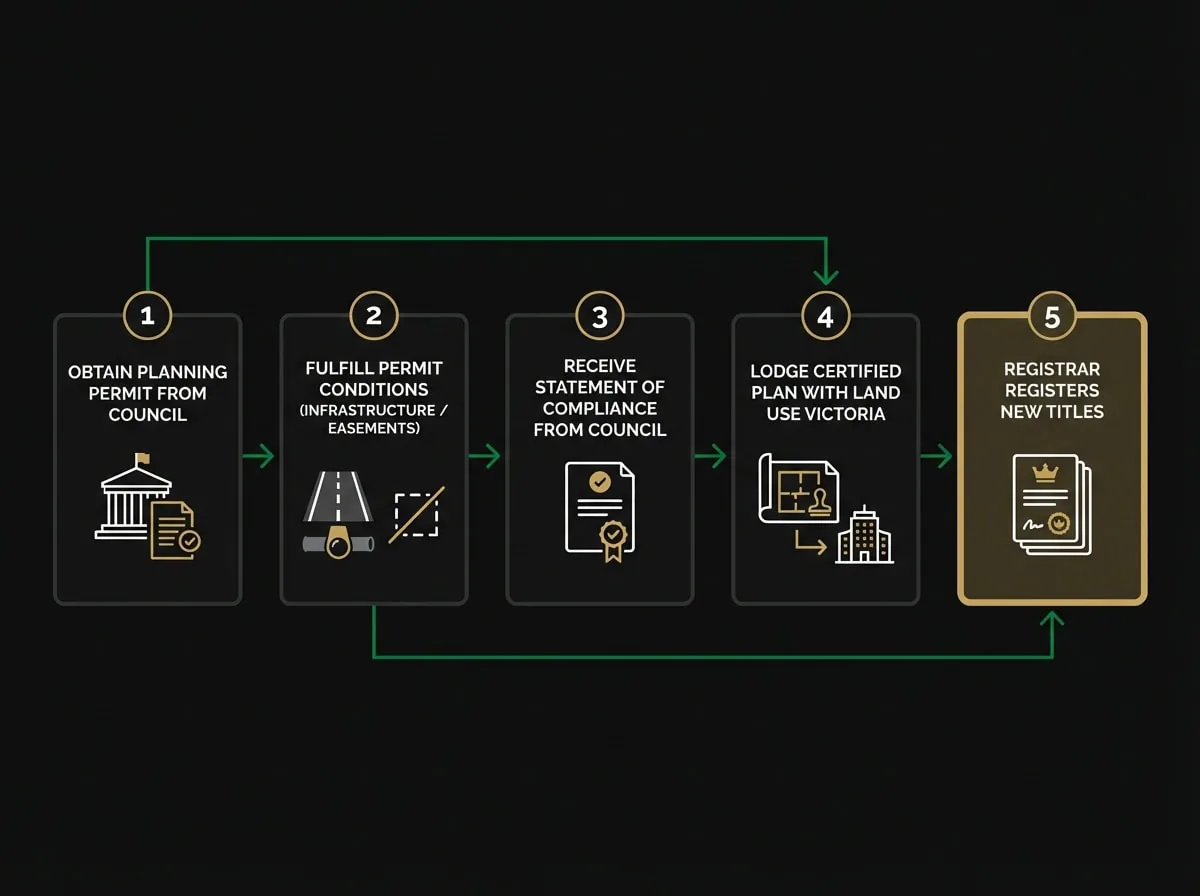
Once the planning permit is granted, the applicant must fulfill all conditions specified in the permit. These conditions typically include completing infrastructure works, creating necessary easements, and obtaining various authority approvals.
After conditions are met, the council issues a statement of compliance certifying that all requirements have been satisfied. The Subdivision (Procedures) Regulations 2021 govern the certification process and timelines for council review of amended plans.
The final step involves lodging the certified plan of subdivision with Land Use Victoria for registration. The Registrar reviews the documentation to ensure compliance with all regulatory requirements before registering the new titles.
What are the minimum lot size requirements for subdividing land in Victoria?
Minimum lot sizes vary based on the zone designation and local planning scheme provisions applicable to the property. There is no single minimum lot size that applies across all of Victoria.
Clause 56 of the Victoria Planning Provisions sets out requirements for residential subdivision that apply to all planning schemes in Victoria. These provisions address lot design, layout standards, and infrastructure requirements rather than prescribing universal minimum lot dimensions.
Each planning scheme contains specific zone schedules that establish minimum lot sizes for that municipality. The General Residential Zone, Low Density Residential Zone, and other zone categories each have different requirements.
Local councils may impose additional minimum lot size requirements through overlays or specific provisions in their planning schemes. Property owners must consult their municipal planning scheme to determine the exact minimum lot size applicable to their land.
Are there any specific zoning regulations that affect the subdivision of property in Victoria?
Zoning regulations directly determine whether subdivision is permitted and under what conditions. Each zone in Victoria’s planning schemes contains specific provisions about subdivision that must be satisfied before a planning permit can be granted.
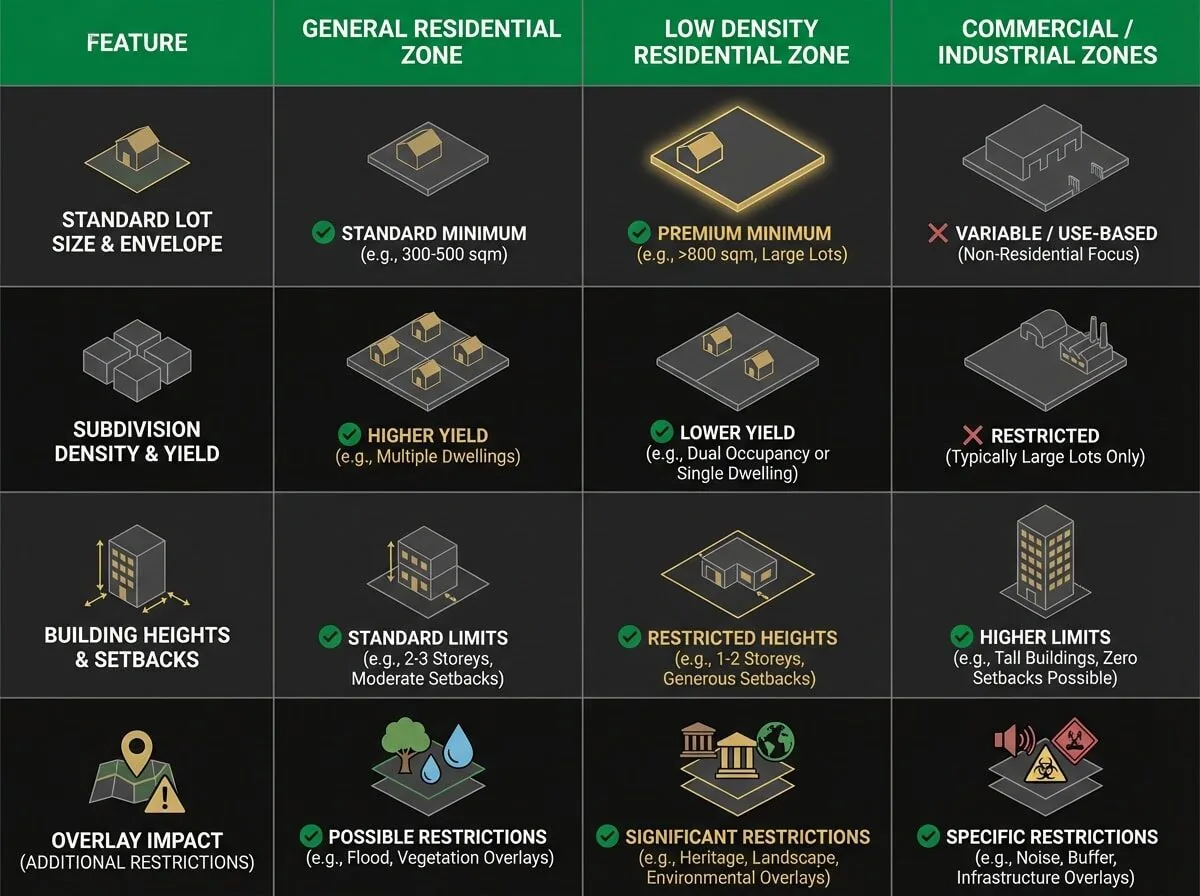
Residential zones typically allow subdivision subject to meeting prescribed standards for lot size, access, and services. Commercial and industrial zones have different subdivision requirements aligned with their intended land uses.
Overlays can add further restrictions or requirements beyond the base zone provisions. Heritage overlays, environmental significance overlays, and bushfire management overlays may impose additional conditions on subdivision applications.
Residential subdivision provisions are supported by complementary planning policy, relevant zone controls, and overlay provisions. These work together to establish the complete regulatory framework for subdivision approval.
What fees are associated with filing a Plan of Subdivision in Victoria?
Planning permit application fees are payable to the local council when lodging the subdivision application. These fees vary by council and are based on the estimated cost of development or number of lots created.
Surveying costs for preparing the certified plan of subdivision typically represent a significant expense. Licensed land surveyors charge fees based on the complexity of the subdivision, number of lots, and site conditions.
Registration fees are payable to Land Use Victoria when lodging the plan of subdivision for registration. These fees are calculated according to the number of titles being created.
Additional costs may include infrastructure contribution charges levied by councils, utility connection fees, and professional fees for town planners or conveyancers. Applicants should budget for engineering costs if infrastructure works are required as permit conditions.
How does one appeal a decision made on a Plan of Subdivision in Victoria?
If a planning permit for subdivision is refused or granted with unacceptable conditions, the applicant has the right to appeal to the Victorian Civil and Administrative Tribunal (VCAT). The appeal must be lodged within 60 days of the council’s decision.
Objectors who made submissions during the permit application process can also appeal to VCAT if they are dissatisfied with the council’s decision to grant a permit. These appeals must be filed within the same 60-day timeframe.
VCAT conducts a hearing where both parties present evidence and arguments. The tribunal has the power to affirm the council’s decision, set it aside and make a new decision, or vary the permit conditions.
Appeals regarding registration matters are handled differently from planning permit appeals. Issues with the Registrar’s refusal to register a plan must be addressed through Land Use Victoria’s processes before pursuing further legal remedies.
This guide provides general information about subdivision requirements in Victoria. Specific requirements may vary by council and property circumstances. Consult with licensed surveyors, town planners, and legal professionals for advice tailored to your subdivision project.