
Property covenants can derail even the most promising development opportunity, yet many Melbourne developers discover these restrictions too late in the acquisition process. These legal obligations attached to land titles may limit building heights, restrict certain uses, or mandate specific design elements that fundamentally alter project feasibility and returns.
Understanding property development due diligence requires developers to identify and assess covenant restrictions during the critical pre-purchase phase, as restrictive covenants can reduce development potential by 20-40% or require costly VCAT applications to modify or remove. Victoria’s planning framework underwent significant changes in late 2025 with new legislation addressing how restrictive covenants interact with planning permits, creating fresh considerations for developers navigating title searches and feasibility assessments.
This guide examines the intersection of covenants and development approval processes in Victoria, covering title investigation strategies, financial implications, and practical approaches to managing covenant conflicts. Developers will learn how to evaluate covenant risks across legal, planning, and financial dimensions while understanding recent regulatory changes that may affect development timelines and costs.
Understanding Property Covenants in Development
Property covenants are legally binding agreements registered on property titles that can dictate what a developer can and cannot do with land. These obligations may require specific actions or impose restrictions that directly affect development feasibility, design options, and project timelines.
What Are Property Covenants?
A property covenant is a legally binding written agreement that runs with the land rather than with individual property owners. These covenants are registered on property titles and remain in force regardless of ownership changes.
Covenants can be created by developers, between neighbours, or required by planning permit conditions. The written terms identify which party benefits from the covenant and which landowner bears the obligation.
Registered covenants appear on certificates of title and are discoverable during property searches. They continue to bind current and future owners until formally removed or modified through legal processes.
Types of Covenants: Restrictive and Positive
Restrictive covenants prohibit certain activities or uses on the land. Common examples include limitations on building height, restrictions on property use, requirements for minimum setbacks, or prohibitions on specific building materials.
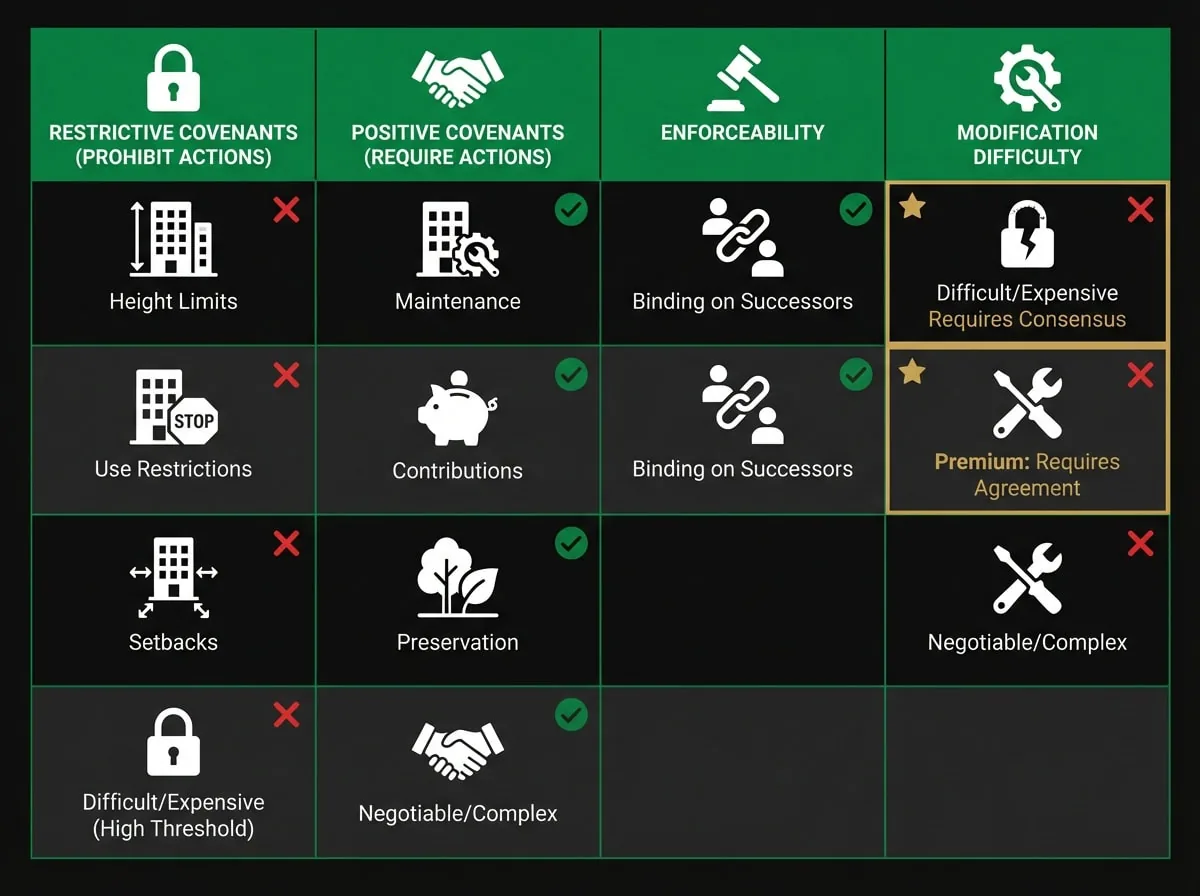
These restrictions may limit innovation in housing estates by constraining design choices and development density. Restrictive covenants can affect project viability through multi-hundred-thousand-dollar removal costs and delays of 12-24 months.
Positive covenants require landowners to take specific actions. These may include maintaining shared driveways, contributing to common area upkeep, or preserving landscape features. Positive covenants typically involve ongoing obligations that pass to subsequent owners.
Purpose and Importance in Property Development
Property covenants serve to maintain neighbourhood character, protect property values, and establish development standards within subdivisions. Developers creating new estates often implement covenants to ensure consistent quality and aesthetic standards across all lots.
During property development due diligence, identifying covenants is critical for assessing site constraints. A covenant restricting building height or density could fundamentally alter a project’s financial feasibility or prevent development altogether.
The Better Decisions Made Faster Act 2026 will introduce new approaches for handling restrictive covenants in the planning system, but it does not commence before 29 October 2027 and the existing rules continue until it does. Developers must evaluate both planning scheme requirements and any registered covenants that may impose additional restrictions beyond standard planning controls. These covenants may conflict with planning permit approvals, requiring separate resolution through VCAT or negotiation with benefiting parties.
Due Diligence Fundamentals for Developers
Property development due diligence encompasses systematic verification of legal, physical, and financial aspects of a site before acquisition. Melbourne developers must navigate Victorian-specific planning schemes and covenant frameworks while managing investigation timelines and risk exposure.
Definition and Scope of Due Diligence
Due diligence in property development represents a systematic investigation process that examines all relevant information about a land parcel and its development potential. The scope extends across legal title verification, planning permit requirements under Victorian planning schemes, and covenant restrictions that may affect intended use.
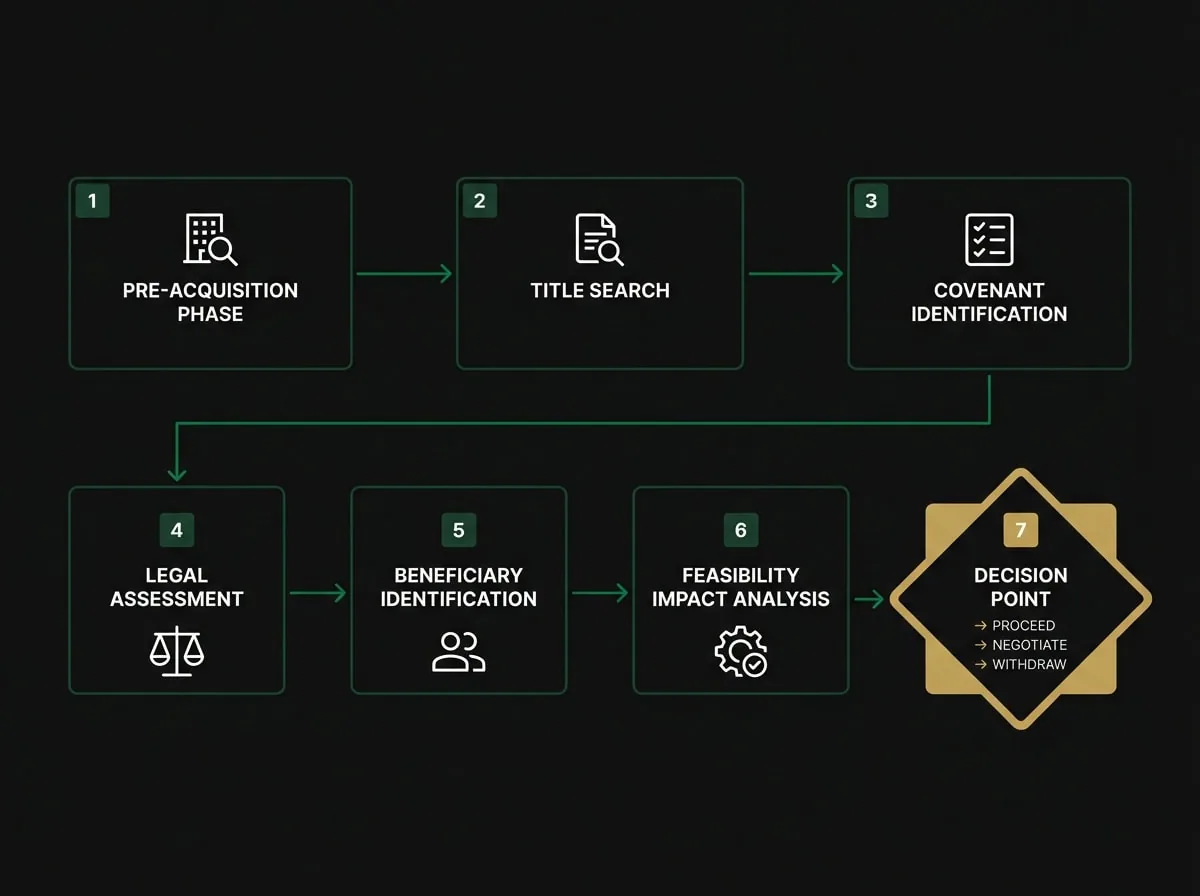
The due diligence process covers legal, environmental, and financial pillars to uncover hidden liabilities before acquisition. This includes reviewing Section 32 vendor statements, examining registered encumbrances, and assessing compliance with ResCode provisions where applicable. SQM Architects conducts comprehensive site assessment services that integrate covenant analysis with planning scheme reviews to identify constraints early in the acquisition process.
A typical due diligence period ranges from 14 to 90 days, though complex sites may require extended timeframes. The investigation scope should align with project complexity and developer risk tolerance.
Role of the Developer in Due Diligence
The developer carries primary responsibility for coordinating and funding comprehensive due diligence investigations across all technical disciplines. This involves engaging solicitors, town planners, surveyors, engineers, and environmental consultants to assess site viability.
Developers must actively review professional reports rather than simply commissioning them. Critical decisions about proceeding with acquisition depend on understanding how restrictive covenants interact with planning scheme overlays and zones.
The developer also determines investigation depth based on project parameters. A subdivision project requires different covenant analysis compared to multi-residential development under Victorian planning provisions.
Importance of Comprehensive Investigations
Thorough due diligence serves as the buyer’s single greatest protection against costly surprises after settlement. Undiscovered covenant restrictions could prevent obtaining a planning permit or delay project timelines significantly.
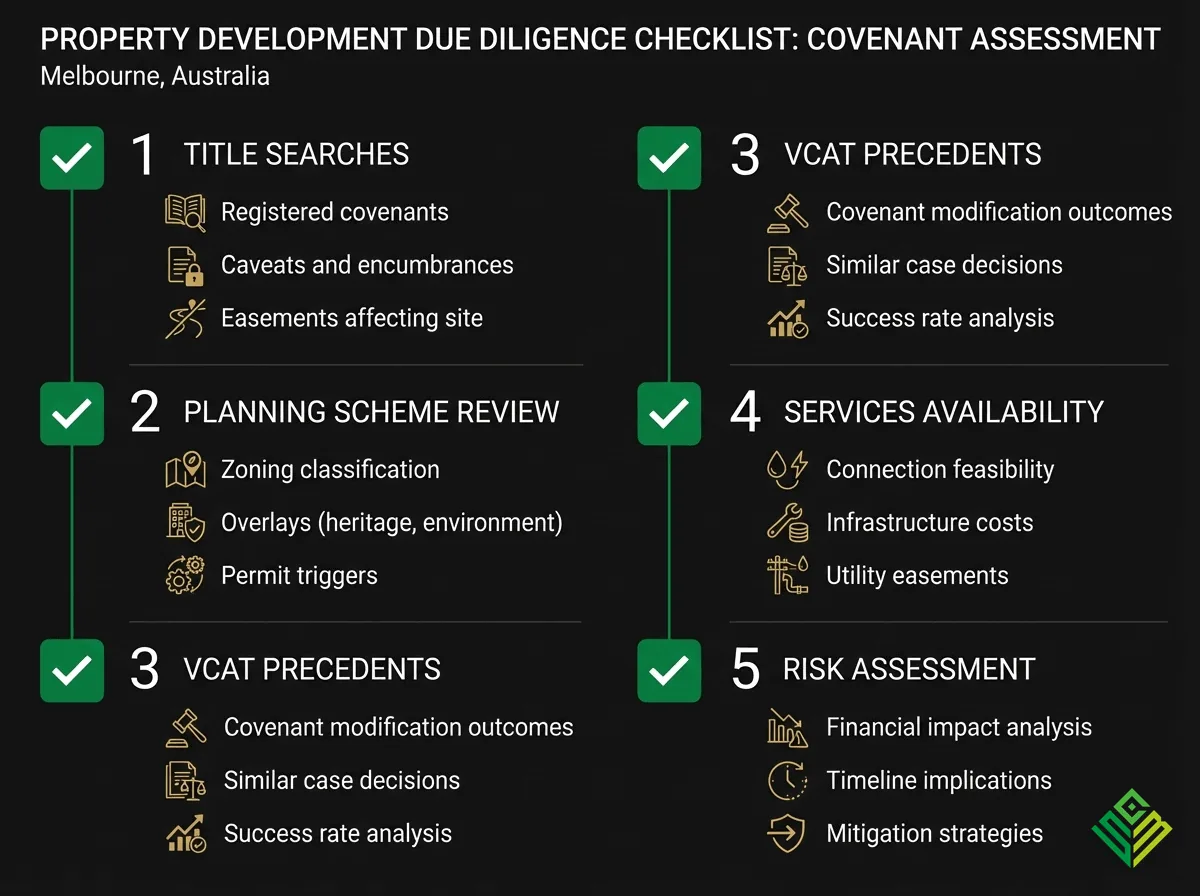
A structured due diligence checklist ensures critical items are not overlooked during investigation. Key areas include:
- Title searches – registered covenants and caveats
- Planning scheme review – zoning, overlays, and permit triggers
- VCAT precedents – covenant modification outcomes
- Services availability – connection feasibility and costs
Risk mitigation through comprehensive investigations typically costs 1-3% of acquisition value but may prevent far greater losses. Developers who skip detailed covenant analysis often face VCAT applications or project redesigns that erode feasibility margins.
Key Legal Considerations and Title Issues
Developers must verify property ownership, identify restrictions, and assess legal limitations before acquiring land. These checks protect against hidden liabilities that could derail development plans or reduce site value.
Title Search and Verification
A title search confirms legal ownership and reveals registered interests affecting the property. Developers should obtain an official title search through the relevant state authority to examine current ownership details, historical transfers, and any caveats or mortgages recorded against the title.
Property titles in Victoria contain critical information including lot and plan numbers, registered proprietors, and the type of title held. Torrens title provides the strongest form of ownership in Australia, offering government-guaranteed protection against competing claims.
Engaging a conveyancer or property lawyer to review title documents helps identify potential issues before contracts are signed. These professionals can spot irregularities such as boundary discrepancies, incorrect property descriptions, or unresolved ownership disputes that may require resolution before settlement.
Identifying Encumbrances and Easements
Encumbrances are legal restrictions or charges registered on a property title that may limit development potential. Common encumbrances include mortgages, caveats, Section 173 agreements under the Planning and Environment Act, and building covenants that restrict dwelling design or materials.
Easements grant third parties specific rights over the property, such as access rights for neighboring properties, utility services corridors, or drainage infrastructure. These can significantly impact site layout and building placement, particularly when easements cross developable areas.
Developers must map all easements and assess their impact on proposed layouts. A right-of-way easement may prevent construction within certain setbacks, while a sewerage easement typically requires a protection zone where structural foundations cannot be placed. Title searches reveal registered easements, but physical site inspections may uncover unregistered access arrangements that could become legal obligations.
Assessing Registered and Unregistered Restrictions
Registered restrictions appear on the certificate of title and include covenants, restrictions on use, and statutory notices. Victorian legislation governs how these restrictions can be enforced, modified, or removed through various mechanisms including VCAT applications.
Property covenants may prohibit certain land uses, limit building heights, mandate architectural styles, or require minimum lot sizes for subdivision. Developers must evaluate whether existing covenants conflict with intended development plans and determine if modification or removal is feasible.
Unregistered restrictions can be harder to detect but equally binding. These may include planning scheme overlays, heritage controls, or agreements with authorities not recorded on title. Legal due diligence should extend beyond title searches to include planning certificate requests and council file reviews that reveal conditions from prior planning permits or development agreements affecting the land.
Get the 7-point site check to run before committing to a permit application — zoning, overlays, setbacks and council red flags, in plain English. Free PDF, instant download.
- Zone, overlay & setback checks
- What council assesses first
- Permit-readiness red flags
Something went wrong. Please try again.
No spam. Unsubscribe anytime.
Check your inbox — your checklist is on its way.
Impact of Covenants on Development Potential
Covenants can fundamentally alter what developers can build and whether projects remain financially viable. Restrictive covenants may result in multi-hundred-thousand-dollar removal costs and 12-24 month delays that transform profitable developments into unworkable ventures.
Development Restrictions and Use Limitations
Restrictive covenants impose specific constraints on how land can be developed and used. Common restrictions include limitations on building height, setbacks, materials, architectural styles, and the number of dwellings permitted on a site.
Developer covenants in housing estates often mandate specific materials and designs, which directly impacts development potential. A covenant preventing multiple dwellings on a large block effectively eliminates subdivision opportunities and medium-density development. Other covenants may prohibit commercial uses, restrict building envelopes, or require specific roof pitches and façade treatments.
These use restrictions operate independently of planning scheme controls. A site might allow multi-unit development under the planning scheme, but a covenant could limit construction to a single dwelling. Developers must obtain a planning permit that complies with zoning while also ensuring the proposal doesn’t breach any registered covenants.
Effect on Financial Viability and Project Feasibility
Development restrictions directly impact financial feasibility by limiting yield and increasing costs. A covenant restricting dwelling numbers reduces potential revenue while holding costs and construction costs per unit typically increase.
Key financial impacts include:
- Reduced gross realization from fewer lots or dwellings
- Extended holding costs during covenant removal applications to VCAT
- Legal fees for covenant variation or removal proceedings
- Potential compensation payments to benefited landowners
- Increased construction costs from mandated premium materials
Cost overruns from covenant-related delays can shift projects from positive to negative feasibility. A 12-month delay adds significant holding costs including interest, rates, and opportunity costs. Covenant removal processes may cost hundreds of thousands of dollars, eroding profit margins or rendering marginal sites unviable.
Financial viability assessments must account for covenant constraints early in due diligence. Development feasibility analysis should incorporate covenant removal costs, timeline extensions, and potential design compromises when evaluating site acquisition opportunities.
Case Studies: Consequences of Overlooking Covenants
Melbourne developers have faced significant setbacks when covenant checks were inadequate during due diligence. One common scenario involves purchasing sites zoned for multi-unit development without identifying single-dwelling covenants on title. The developer proceeds with design and planning permit applications, only discovering the covenant when preparing for construction or during purchaser conveyancing.
The outcome typically involves either abandoning the multi-unit project or pursuing VCAT proceedings to remove or vary the covenant. VCAT applications require demonstrating the covenant no longer provides substantial benefit or that proposed changes are reasonable. Neighboring landowners may oppose removal, extending timeframes and increasing legal costs.
Another frequent oversight involves material and design covenants in established estates. Developers propose cost-effective construction methods only to discover covenants requiring brick veneer, specific roof materials, or architectural approval from covenant administrators. These requirements force redesigns, specification changes, and budget revisions that may eliminate project feasibility entirely.
Zoning, Planning, and Regulatory Compliance
Developers must navigate Victoria’s planning framework to ensure proposed developments comply with zoning controls, satisfy planning permit requirements, and address any planning overlays or heritage constraints that may affect the site.
Zoning Laws and Planning Regulations
Zoning controls within Victoria’s planning schemes determine what types of development can occur on a property. Each zone has specific purposes and requirements that govern land use, building heights, setbacks, and site coverage. Common residential zones include General Residential Zone, Neighbourhood Residential Zone, and Residential Growth Zone, each with different development standards.
A town planner can assess whether a proposed development aligns with the applicable zone provisions. Some developments may be permitted as-of-right, while others require a planning permit through the local council. The planning scheme also contains state and local planning policies that guide decision-making.
Developers should review the planning scheme early in the due diligence process. This review identifies potential planning constraints and helps determine whether the intended development is permissible. Zoning can significantly impact feasibility, as restrictive zones may limit density or building scale.
Development Approvals and Special Conditions
Planning permits are required for most property developments in Victoria unless the proposal meets exemption criteria. The application process involves submitting detailed plans, supporting documents, and demonstrating compliance with planning controls. Councils typically assess applications within 60 days, though complex proposals may take longer.
Planning permits often include special conditions that developers must satisfy before construction begins. These conditions may require additional reports, infrastructure contributions, or design modifications. VCAT (Victorian Civil and Administrative Tribunal) provides an avenue for appeal if a permit is refused or conditions are unreasonable.
Developers should budget for planning permit costs and timeframes during development approvals. Engaging consultants early can streamline the application process and reduce delays. Understanding the specific conditions likely to be imposed helps developers plan for compliance costs.
Planning Overlays and Heritage Considerations
Planning overlays add additional controls beyond base zoning requirements. Common overlays include Design and Development Overlays, Heritage Overlays, Environmental Significance Overlays, and Development Plan Overlays. Each overlay introduces specific requirements that may affect development potential.
Properties with a heritage listing face additional scrutiny during the planning permit process. Heritage Overlays protect buildings, streetscapes, or archaeological sites of cultural significance. Alterations to heritage-listed properties typically require council approval and may limit design flexibility.
Developers must identify all applicable overlays during due diligence. Some overlays mandate particular building materials, design standards, or environmental protections. Bushfire Management Overlays, for example, impose construction requirements in high-risk areas. Understanding overlay controls early prevents costly redesigns later in the development process.
Environmental and Physical Due Diligence
Physical and environmental investigations reveal site constraints that may affect development feasibility, construction costs, and long-term liability. These assessments identify contamination, geotechnical risks, and infrastructure capacity before acquisition.
Environmental Site Assessment and Impact
An environmental site assessment examines potential contamination and environmental liabilities that could restrict land use or trigger remediation obligations. Phase 1 assessments review site history, previous uses, and surrounding land to identify contamination risks. Phase 2 investigations involve soil and groundwater testing when contamination is suspected.
For Melbourne property developers, environmental due diligence typically uncovers issues such as:
- Historical industrial use that may have left soil contamination requiring costly remediation
- Asbestos presence in existing structures scheduled for demolition
- Acid sulfate soils in low-lying areas near waterways
- Underground storage tanks from former service stations or industrial operations
Environmental impact assessment may be required for larger developments or environmentally sensitive sites. This process evaluates how the proposed development affects surrounding ecology, waterways, air quality, and noise levels. Victoria’s planning scheme provisions specify when detailed environmental studies must accompany a planning permit application.
Soil, Site, and Infrastructure Analysis
Geotechnical investigations assess soil conditions and site stability to determine foundation requirements and construction methodology. Surveyors conduct detailed site assessment to establish boundaries, levels, easements, and physical constraints. Poor soil conditions can substantially increase foundation costs or render a site unviable.
Key physical investigations include:
| Assessment Type | Purpose |
|---|---|
| Geotechnical bore testing | Determines soil bearing capacity and foundation design |
| Contour survey | Maps existing levels and drainage patterns |
| Services location | Identifies underground utilities and connection points |
| Flood and drainage studies | Assesses stormwater management requirements |
Infrastructure capacity analysis examines whether existing water, sewer, electricity, and gas services can accommodate the proposed development. Developers may face significant costs if infrastructure upgrades or new connections are required. Utility providers typically require early engagement to confirm capacity and connection timeframes.
Site access constraints, including easements, rights of way, and construction vehicle access, must be verified through physical inspection and survey documentation.
Financial and Contractual Considerations
Property covenants can significantly affect acquisition costs, ongoing holding expenses, and loan approval prospects. Developers must integrate covenant analysis into financial planning and ensure contractual protections are in place before settlement.
Evaluating Acquisition and Holding Costs
Covenants can directly impact both initial acquisition costs and ongoing expenses throughout the development lifecycle. A property burdened with restrictive covenants may require additional legal expenditure to modify or remove these restrictions before development can proceed.
Acquisition costs increase when covenant variations need approval from benefited landowners or require applications to VCAT. Legal fees for covenant removal or modification typically range from several thousand to tens of thousands of dollars depending on complexity. These expenses must be factored into feasibility calculations alongside standard costs like stamp duty and conveyancing fees.
Holding costs can escalate if covenant issues delay project commencement. Land tax continues to accrue while covenant negotiations or VCAT proceedings are underway. Developers may face extended settlement periods while resolving covenant matters, which increases interest on bridging finance and opportunity costs. A mortgage broker should be consulted early to understand how existing covenants might affect loan approval conditions and financing arrangements.
Properties with unresolved covenant disputes may attract lower valuations, reducing available loan-to-value ratios and requiring additional equity contributions.
Tax Implications and Financial Planning
Covenant-related expenses may be treated differently for tax purposes depending on their nature and timing. Costs incurred to remove or modify covenants that prevent development are generally considered capital expenses rather than deductible operating costs.
Financial due diligence should include analysis of how covenant removal costs affect the project’s overall tax position. Capital costs associated with covenant variations typically form part of the property’s cost base for capital gains tax purposes. Developers structuring projects through special purpose vehicles need to consider how these expenses flow through to the ultimate beneficial owners.
Ongoing compliance with building scheme covenants may create deductible maintenance or management expenses if they relate to common infrastructure or shared facilities. However, payments to vary or extinguish covenants are usually capital in nature.
Due Diligence Clauses in Contracts
A properly drafted due diligence clause provides developers with time to investigate covenants and the option to withdraw from the purchase if issues cannot be resolved. The clause should specify sufficient time to complete title searches, obtain legal opinions on covenant enforceability, and assess modification prospects.
Standard due diligence clauses typically allow 30 to 90 days depending on project complexity. For properties with known covenant issues, developers should negotiate extended periods to allow time for negotiations with benefited owners or preliminary VCAT advice. The clause must clearly state that covenant matters constitute grounds for contract termination without penalty.
Key contractual protections include:
- Vendor warranties regarding all known covenants affecting the property
- Indemnities for undisclosed covenant breaches or enforcement actions
- Special conditions making settlement conditional on covenant removal or modification
- Sunset clauses allowing termination if covenant issues cannot be resolved within specified timeframes
Contracts should require vendors to provide complete title particulars including all registered and unregistered covenants. Developers may negotiate for vendors to initiate covenant removal processes or share associated costs as a condition of sale.
Strategies for Managing and Modifying Covenants
Developers facing restrictive covenants have several pathways to address constraints, ranging from formal legal applications to negotiated agreements with beneficiaries. Success often depends on selecting the appropriate mechanism and engaging qualified professionals early in the process.
Process for Removing or Varying Covenants
Victorian developers can pursue covenant modification through several legal pathways, each suited to different circumstances. The primary method involves applying to VCAT under Section 84 of the Property Law Act 1958, where the tribunal assesses whether the covenant is obsolete, impedes reasonable land use, or provides no practical benefit to those entitled to enforce it.
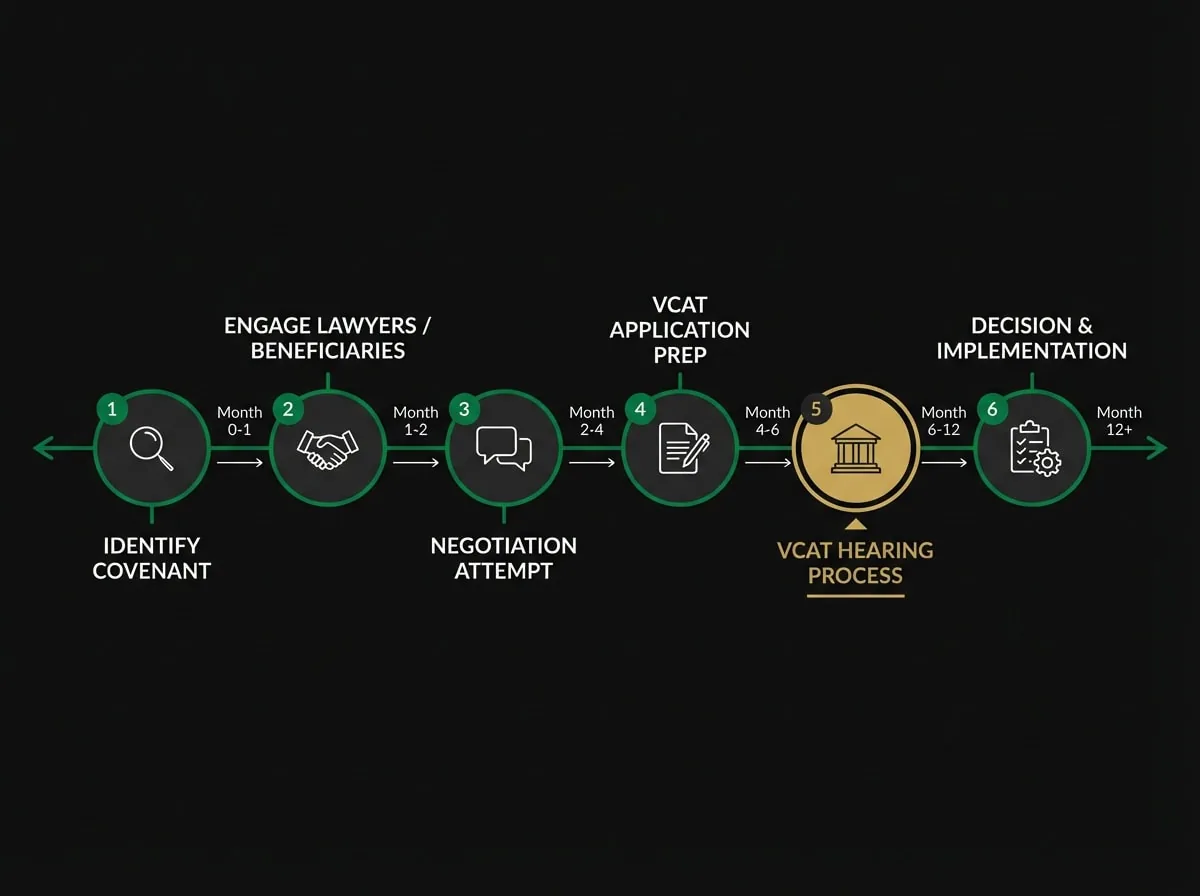
Developers may also negotiate directly with covenant beneficiaries to obtain a deed of release or variation. This approach typically proves faster and less costly when beneficiaries are identifiable and willing to negotiate. A conveyancer can conduct title searches to identify all parties with enforceable rights.
Key Application Requirements:
- Evidence demonstrating the covenant no longer serves its original purpose
- Documentation of proposed development plans
- Notification to all affected parties
- Payment of prescribed fees
The VCAT process typically spans 6-12 months, depending on complexity and whether beneficiaries object. Property developers should factor these timeframes into project planning to avoid costly delays.
Negotiation and Risk Management Approaches
Risk mitigation begins with thorough due diligence before property acquisition. Developers should engage property lawyers to assess covenant enforceability, identify beneficiaries, and estimate removal costs. This analysis informs purchase negotiations and project feasibility assessments.
When approaching beneficiaries, developers may offer financial compensation for covenant release. Settlement amounts vary widely based on the covenant’s value to beneficiaries and the proposed development’s impact. Documentation of comparable settlements strengthens negotiating positions.
Effective Risk Management Steps:
- Obtain title insurance covering covenant enforcement claims
- Include covenant removal as a condition in sale contracts
- Budget contingency funds for removal costs
- Prepare alternative development scenarios if removal fails
Some developers proceed with complying development under planning schemes while accepting covenant constraints, particularly when covenants align with planning controls already in place.
Role of Mediation and Legal Professionals
Mediation offers a structured alternative when direct negotiations stall. A neutral mediator facilitates discussions between developers and covenant beneficiaries, often achieving outcomes more quickly than VCAT proceedings. This approach works particularly well when multiple beneficiaries hold differing positions.
Property lawyers play essential roles throughout covenant management. They assess enforceability based on current case law, draft variation agreements, and represent developers in VCAT hearings. Experienced practitioners understand which arguments resonate with decision-makers and how to present evidence effectively.
When to Engage Professionals:
| Professional | Primary Role | Engagement Timing |
|---|---|---|
| Conveyancer | Title searches, beneficiary identification | Pre-acquisition |
| Property Lawyers | Legal strategy, applications, negotiations | Due diligence phase |
| Mediator | Facilitated negotiation | After initial contact fails |
The Victorian Government’s recent planning reforms may introduce new frameworks for addressing restrictive covenants, potentially streamlining removal processes. Developers should monitor legislative changes that could affect covenant management strategies.
Frequently Asked Questions
Developers commonly face challenges in identifying, verifying, and managing property covenants during site acquisition and project planning. Understanding the legal processes, compliance requirements, and options for modification helps mitigate risks and avoid costly delays.
What legal processes should be undertaken to verify the existence of property covenants before development?
Developers should obtain a copy of the Certificate of Title from Land Registry Victoria to identify registered covenants and restrictions. The title search reveals any encumbrances, easements, or covenants that bind the property.
A thorough property development due diligence checklist typically includes reviewing Section 32 vendor statements and examining historical planning permits. Legal practitioners may need to search council records and planning scheme amendments to identify unregistered or informal restrictions that could affect development.
Developers should engage a conveyancer or property lawyer to interpret covenant language and assess enforceability. Some covenants may be outdated or unenforceable due to changes in planning regulations or the passage of time.
How can developers ensure compliance with existing property covenants during the planning stage?
The development design must be assessed against all registered covenants before lodging a planning permit application. Architects and planners should review covenant restrictions on building height, setbacks, materials, and land use during the concept design phase.
Most restrictive covenants apply to complying development in Victoria, meaning they operate independently of planning controls. A planning permit approval does not override or extinguish covenant obligations unless specifically addressed through Victorian Civil and Administrative Tribunal (VCAT) proceedings.
Developers may need to obtain consent from the covenant beneficiary before commencing works. Written agreement from affected parties provides protection against future enforcement action or injunctions.
What are the consequences of breaching property covenants for developers and how can these be mitigated?
Beneficiaries of covenants can seek injunctions to stop construction or require removal of non-compliant works. Courts may order costly remediation, including demolition of structures that breach height, setback, or material restrictions.
Developers may face damages claims for diminution in property value suffered by neighboring landowners with the benefit of the covenant. Legal costs in defending breach claims can escalate quickly, particularly if matters proceed to Supreme Court litigation.
Risk mitigation strategies include obtaining covenant releases before acquisition, negotiating deed variations with beneficiaries, and securing appropriate insurance coverage. Victoria’s planning overhaul includes new frameworks for restrictive covenants under recent legislative reforms.
In what ways can property covenants be modified or lifted to accommodate new development?
Developers can negotiate directly with covenant beneficiaries to obtain a release or variation through a formal deed. This approach works best when beneficiaries receive adequate compensation or when the proposed development provides community benefits.
VCAT has jurisdiction under the Property Law Act 1958 to modify or discharge covenants that are obsolete, unreasonable, or contrary to public interest. Applications must demonstrate that the covenant impedes reasonable use of the land or that changes in the neighborhood character make enforcement inequitable.
Recent Victorian planning reforms have introduced streamlined pathways for addressing outdated covenants that conflict with strategic planning objectives. The planning scheme may prevail over restrictive covenants in certain circumstances, though this remains a developing area of law.
What due diligence steps are critical when assessing property covenants in a potential development site?
Developers should conduct title searches early in the acquisition process to identify all registered covenants and easements. The search must extend to examining whether covenant benefits run with neighboring land or are held by specific parties.
Comprehensive due diligence involves assessing legal, financial, and physical aspects of covenant restrictions. This includes obtaining legal opinions on enforceability, identifying all parties with standing to enforce covenants, and estimating costs for potential releases or variations.
Developers should assess whether covenants align with the intended development program during feasibility analysis. Material restrictions may justify price renegotiation or site rejection if compliance costs or modification risks are prohibitive.
How do property covenants affect future changes or improvements to a development project?
Covenants may restrict the ability to modify buildings or implement design changes during construction. Material selection, color schemes, and architectural features specified in covenants limit flexibility in responding to market demands or cost pressures.
Post-completion alterations or improvements by future owners remain subject to covenant restrictions. This can affect property marketability and resale values if covenants significantly constrain renovation or expansion options.
Developers should disclose all relevant covenants to purchasers through Section 32 statements and contract documentation. Failure to adequately disclose covenant restrictions may expose developers to claims for misrepresentation or breach of warranty.
Disclaimer: This article provides general information about property covenants and development due diligence in Victoria. It should not be relied upon as legal, financial, or professional advice. Developers should engage qualified solicitors, conveyancers, and planning consultants to assess specific covenant issues affecting their projects. SQM Architects provides architectural and planning services but does not offer legal advice regarding covenant enforceability or removal strategies.