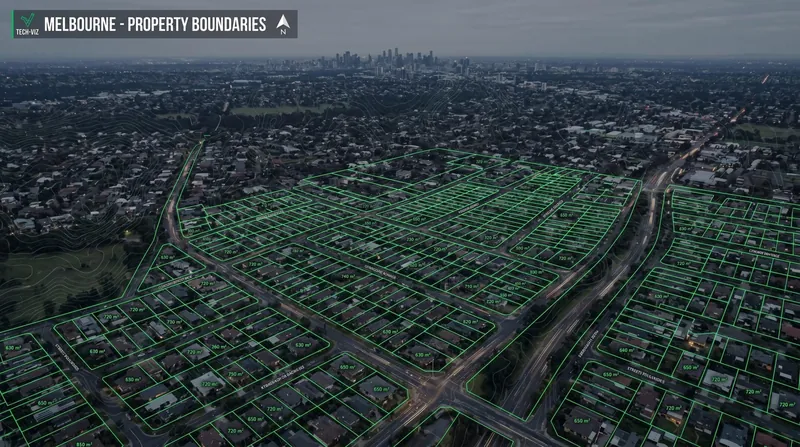
The 10-day VicSmart pathway is a fast-track planning permit process in Victoria that requires the responsible authority to decide eligible applications — including certain subdivisions — within 10 business days, compared with the 60 statutory days for a standard permit. It applies only to specified, low-complexity classes of application, is assessed against a short list of decision guidelines, and involves no public notice or third-party appeal. For Melbourne developers, knowing whether a subdivision qualifies for VicSmart can cut months from a project timeline. For a full overview of the subdivision process in Victoria, see our guide on how to subdivide land in Victoria.
This is general information about Victorian planning, not legal or planning advice — VicSmart eligibility depends on your zone, the specified classes in your planning scheme and any overlays, so confirm your pathway with the relevant council.
What is the 10-day VicSmart subdivision pathway?
VicSmart is a streamlined assessment track within the Victorian planning system, with a statutory decision timeframe of 10 business days for eligible applications. It was designed for straightforward proposals where the planning issues are limited and well understood. Where a subdivision falls within a specified VicSmart class, the council assesses it against a defined, narrower set of decision guidelines, does not give public notice, and the decision is not open to third-party (objector) appeal at VCAT — which together remove the most common sources of delay.
How fast is VicSmart compared with a standard permit?
VicSmart’s 10-business-day clock is roughly six times faster than the 60 statutory days for a standard planning permit — and in practice the gap is wider, because standard applications are frequently extended by requests for further information, public notice periods and objections. The trade-off is scope: VicSmart only covers eligible classes, and the assessment is deliberately limited, so complex or contentious proposals are not eligible. For a council-by-council breakdown of standard permit timeframes, see our Planning Permit Timeline Melbourne by Council guide.
Which subdivisions can use VicSmart?
VicSmart applies only to the classes of application specified in the planning scheme — for subdivision these are typically low-complexity proposals such as subdividing land into two lots, realigning a common boundary, or creating a lot around an existing building, subject to thresholds. Eligibility is class-based, not discretionary: an application either falls within a listed VicSmart class for the relevant zone or it does not. Larger or multi-lot subdivisions, or those affected by certain overlays, generally fall outside VicSmart and follow the standard pathway. Always check the specified classes for your zone before assuming the 10-day pathway is available.
Get the 7-point site check to run before committing to a permit application — zoning, overlays, setbacks and council red flags, in plain English. Free PDF, instant download.
- Zone, overlay & setback checks
- What council assesses first
- Permit-readiness red flags
Something went wrong. Please try again.
No spam. Unsubscribe anytime.
Check your inbox — your checklist is on its way.
Where VicSmart fits in the 2025–26 planning reforms
Victoria’s 2025–26 planning reforms are progressively expanding fast-track pathways as part of the push to deliver more housing, including streamlined VicSmart-style routes for code-assessed townhouses and low-rise development. The direction of travel is more deemed-to-comply, code-based assessment and shorter statutory timeframes for straightforward proposals. For a detailed breakdown of the accelerated permit pathways introduced under recent legislation, see our Fast-Track Planning Bill: Melbourne Developer’s Guide. Developers should treat the fast-track pathways as a moving target during this period and confirm the current provisions with the Department of Transport and Planning, because the eligible classes and timeframes are being updated through successive amendments.
What VicSmart does not remove
A 10-day decision does not mean approval is assured, and it does not remove the need to meet the underlying standards. A VicSmart subdivision must still satisfy the relevant requirements — including, where applicable, ResCode standards such as lot dimensions and servicing — and a council can still refuse a non-compliant application. Overlays (heritage, significant landscape, bushfire) can also take a proposal outside the VicSmart classes entirely. The pathway speeds up the decision; it does not lower the bar. To understand the most common pitfalls that can derail a subdivision — including non-compliance issues — see our guide on common mistakes in Victoria land subdivision.
Residential zone standards a VicSmart subdivision still has to meet
Because VicSmart speeds up the decision without lowering the standards, the lots a subdivision creates — and anything later built on them — still have to satisfy the development standards of the underlying residential zone. The figures below are the indicative Victoria Planning Provisions (VPP) default standards for the three main residential zones — the baseline a feasibility check starts from before a site-specific assessment. A council’s zone schedule, ResCode and any overlays can vary them, so treat these as a starting point rather than the final position.
| Residential zone | Indicative min. lot size | Garden area | Max. site coverage | Max. building height |
|---|---|---|---|---|
| Neighbourhood Residential (NRZ) | ~300 m² | up to 35% | 60% | 9 m |
| General Residential (GRZ) | ~300 m² | up to 35% | 65% | 11 m |
| Residential Growth (RGZ) | ~200 m² | Not applicable | 70% | 13.5 m |
What this means for a subdivision: the Residential Growth Zone is generally the most generous for yield — the highest site coverage and building height, the lowest indicative lot size, and no garden area requirement — while the Neighbourhood Residential Zone is the most constrained, and the General Residential Zone sits between them. In the NRZ and GRZ, the garden area requirement is often the figure that decides whether a two-lot subdivision works, because each resulting lot has to set aside that proportion as garden area. A VicSmart subdivision that meets its specified class may still be refused if the resulting lots cannot meet these standards, so they are worth checking before you lodge.
How to use the VicSmart pathway
The practical step is to confirm, before lodging, whether your specific subdivision falls within a VicSmart class for your zone — because lodging the right application type is what unlocks the 10-day clock. A short preliminary assessment of your site’s zone, lot dimensions and overlays will usually establish this. Our free Subdivision Screener gives an instant indicative read on whether a Melbourne property can be subdivided, and a site-specific assessment confirms the pathway and the standards that apply.
Frequently asked questions
What is the 10-day VicSmart subdivision pathway in Victoria?
It is a fast-track planning permit process under which the council must decide an eligible subdivision application within 10 business days. It applies to specified low-complexity subdivision classes, is assessed against limited decision guidelines, and has no public notice or third-party appeal.
How long does VicSmart take versus a normal permit?
VicSmart has a 10-business-day statutory decision timeframe, compared with 60 statutory days for a standard planning permit — and standard permits are often longer in practice once further-information requests, notice and objections are included.
Which subdivisions qualify for VicSmart?
Only the subdivision classes specified in the planning scheme for your zone — typically simple proposals such as two-lot subdivisions, boundary realignments or creating a lot around an existing building, subject to thresholds and overlays. Multi-lot or complex subdivisions generally do not qualify.
Does a VicSmart subdivision still need to meet ResCode?
Yes. VicSmart speeds up the decision but does not remove the underlying requirements — an eligible subdivision must still meet the applicable standards (including ResCode where relevant) and can be refused if it does not comply.
What lot size do I need to subdivide in a Melbourne residential zone?
There is no single statewide minimum. As an indicative guide, the Victoria Planning Provisions default standards are around 300 m² per lot in the Neighbourhood and General Residential Zones and around 200 m² in the Residential Growth Zone, but the binding figure for your site comes from your council’s zone schedule, the garden area requirement (up to 35% for larger lots) and a ResCode assessment. Check your planning scheme, or run an indicative feasibility check, before assuming a lot can be split.
This article provides general information only. For project-specific guidance, consult with qualified professionals.
Published by SQM Architects (ABN 32 600 928 390, ARBV Reg. No. 51498). This article is general information about Victorian planning and development, not personal, legal or financial advice.