

The Building Act 1993 governs all building activity in Victoria, establishing the legislative framework for construction standards, permits, and practitioner responsibilities. For Melbourne developers, understanding this legislation has become increasingly critical as Victoria’s regulatory framework continues to evolve with enhanced enforcement powers and consumer protection measures.
The Building Act 1993 establishes mandatory requirements for building permits, occupancy certificates, practitioner registration, and compliance standards that directly impact project timelines, budgets, and legal obligations for Victorian developers. Recent amendments have strengthened consumer protection measures and expanded regulatory oversight, particularly for multi-storey residential projects. The Building and Plumbing Commission now has expanded powers to ensure building quality and compliance throughout the construction process.
This guide examines the Act’s regulatory framework, permit processes, practitioner obligations, and enforcement mechanisms affecting commercial and residential development in Melbourne. It addresses the interplay between building legislation and planning schemes, warranty requirements, and practical considerations for owner-builder arrangements. Understanding these provisions helps developers navigate compliance requirements, avoid costly delays, and manage regulatory risk throughout the construction phase.
Understanding the Building Act 1993
The Building Act 1993 establishes the regulatory framework for building construction and standards across Victoria, defining the roles of building practitioners and the Building and Plumbing Commission (BPC). This legislation outlines specific objectives, terminology, and connects with broader planning regulations that govern development in the state.
Objectives and Scope of the Act
The Building Act 1993 serves as the primary legislation regulating building activity across Victoria. It establishes minimum standards for building construction, safety features, and maintenance requirements.
The Act governs building practitioners, sets construction standards, and defines the framework for building permits and inspections. It applies to residential buildings, commercial structures, and specialist work including plumbing installations.
Key areas of regulation include:
- Building permits and approval processes
- Practitioner registration and conduct
- Building standards and safety requirements
- Dispute resolution mechanisms
- Enforcement and compliance measures
The Building and Plumbing Commission administers the Act with powers to manage compliance, oversee warranty schemes, and enforce building standards. The BPC’s role includes strengthening consumer protection and industry accountability across Victoria’s construction sector.
Key Definitions Used in the Act
The Building Act 1993 contains specific terminology that defines its application and scope. Understanding these definitions helps property developers navigate regulatory requirements effectively.
Building work encompasses construction, renovation, and demolition activities requiring compliance with building standards. Building practitioner refers to registered professionals including builders, surveyors, and building inspectors authorised to carry out specific work.
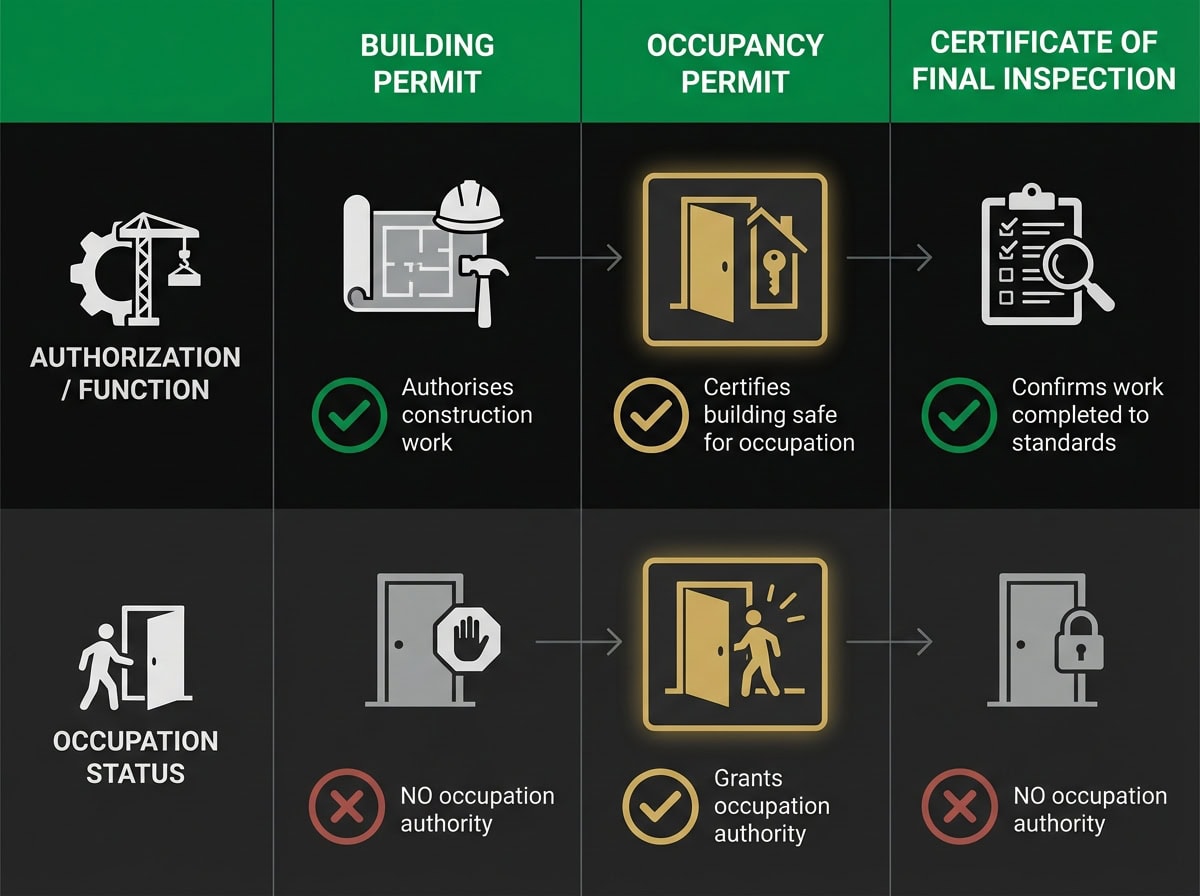
A building permit authorises building work and typically must be obtained before construction commences. Occupancy permit allows use of a building once work complies with relevant standards and regulations.
The Act distinguishes between major domestic building work (residential contracts exceeding prescribed amounts) and minor works with different regulatory requirements. Owner-builder refers to property owners who construct or manage building work on their own land, subject to specific limitations and insurance requirements.
Legislative Framework and Related Laws
The Building Act 1993 operates within a broader legislative framework alongside the Planning and Environment Act 1987. While planning and building regulations address different aspects, both typically apply to development projects.
Planning schemes control land use and development under the Planning and Environment Act 1987, generally requiring planning permits for many projects. The Building Act 1993 governs construction standards and building permits, ensuring structural safety and compliance.
Recent amendments have strengthened the building system, with changes published in the Government Gazette establishing new commencement dates for reforms. The BPC holds expanded powers for compliance oversight and enforcement across Victoria’s construction industry.
Developers can access Victorian legislation through official repositories, with historical versions available through AustLII for reference. The Building Regulations 2018 provide detailed technical requirements that give effect to National Construction Code provisions across Victoria.
Building Permits: Processes and Requirements
Building permits in Victoria are mandatory approvals under the Building Act 1993 that certify proposed construction complies with applicable regulations. The responsible authority, typically the relevant building surveyor, assesses applications for building permits and issues permits based on approved documentation including plans and specifications.
Obtaining a Building Permit
Current legislation requires that all commercial and residential building work generally must have a building permit issued before work commences. Property developers typically must engage a registered building practitioner, usually a private or municipal building surveyor, to assess and approve their project.

The relevant building surveyor examines whether the proposed work complies with the Building Act 1993, Building Regulations 2018, and the National Construction Code. They may approve, request modifications, or issue a refusal of building permit with stated reasons for refusal.
Key parties involved in the permit process:
- Relevant building surveyor – assesses applications and issues permits
- Municipal building surveyor – council-appointed surveyor who may also assess permits
- Building and Plumbing Commission (BPC) – regulates the building industry and oversees compliance
- Registered building practitioner – licensed professionals who can undertake building work
The BPC oversees the building permit system and may investigate compliance matters. Developers should ensure all documentation meets current regulatory requirements before submitting applications.
Building Permit Application and Documentation
Applications for building permits typically require comprehensive documentation submitted to the chosen building surveyor. The standard building permit application usually must include architectural plans, engineering specifications, energy efficiency reports, and an information statement detailing the proposed work.
Property developers typically submit:
- Detailed plans and specifications stamped by registered practitioners
- Structural engineering calculations and certifications
- Hydraulic, electrical, and mechanical services documentation
- Soil reports and site classification details
- Notice to secretary to department for certain project types
- Owner’s consent and contract documentation
The relevant building surveyor reviews decisions on building permits within statutory timeframes. Incomplete applications may result in requests for additional information or suspension of building permit assessment until documentation is rectified.
Different types of permit exist depending on project scope, including full building permits, staged permits, and demolition permits. Each permit type requires specific documentation aligned with the proposed work scope.
Building Permit Number and Tracking
Upon approval, each permit receives a unique building permit number used to track the project throughout construction. This identifier appears on all compliance documentation, inspection records, and correspondence with the BPC.
The building permit number enables:
- Tracking inspection schedules with the building inspector
- Recording compliance certificates and essential safety measures
- Linking occupancy permit applications to the original approval
- Maintaining building records with the responsible authority
Developers typically must display the building permit number prominently on site during construction. The BPC maintains a register of building permits accessible for verification purposes, ensuring transparency in Victoria’s building system.
Building inspectors reference the permit number when conducting mandatory inspections at specified construction stages. Before issuing an occupancy permit, the relevant building surveyor verifies all inspections linked to the building permit number are satisfactorily completed and the building is safe for occupation.
Occupancy Permits and Certificates
Before any building can be legally occupied in Victoria, specific documentation generally must be obtained from the relevant building surveyor. These requirements apply to both permanent structures and certain temporary installations, with distinct processes governing when an occupancy permit or certificate of final inspection is needed.
Issuing and Importance of Occupancy Permits
An occupancy permit is issued by a building surveyor to certify that a building is suitable for occupation and complies with the Building Act 1993, Building Regulations 2018, and the National Construction Code. The Building and Plumbing Commission oversees building compliance and may investigate matters even after occupancy permits have been granted.
Property developers typically must ensure the building is safe for occupation before a building surveyor can issue the permit. This usually requires a completed application lodged with the building surveyor who issued the original building permit, along with any applicable fees.
Under section 46 of the Building Act 1993, an occupancy permit serves as evidence that the building is suitable for occupation, though it does not guarantee full compliance with all building regulations. Occupying a building without the required occupancy permit may constitute a breach of the Building Act 1993 and could expose developers to legal consequences.
Certificate of Final Inspection
A certificate of final inspection represents an alternative to an occupancy permit for certain building projects. The building permit itself typically specifies whether an occupancy permit or certificate of final inspection is required for a particular project.
This certificate confirms that the building work has been completed in accordance with the approved plans and relevant standards. The certificate does not authorise occupation in the same manner as an occupancy permit, and developers should verify which documentation applies to their specific project type.
Prescribed Temporary Structures
The Building Act 1993 includes provisions for prescribed temporary structures that may require occupancy permits under specific circumstances. Section 21 of the Building Act 1993 outlines when an occupancy permit may be required and may specify whether a draft building manual must accompany the application.
Temporary structures used for construction purposes or events may fall under different regulatory requirements compared to permanent buildings. Developers should confirm with their building surveyor whether prescribed temporary structures on their site require occupancy permits before they can be legally used or occupied.
Roles and Responsibilities of Practitioners
The Building Act 1993 establishes distinct roles for practitioners who ensure building compliance and safety throughout the construction process. Each practitioner carries specific duties under Victorian legislation, with the Building and Plumbing Commission providing regulatory oversight.
Relevant Building Surveyor Duties
A relevant building surveyor holds primary responsibility for issuing building permits and ensuring compliance with the Building Act 1993 and Building Regulations. This role may be filled by either a municipal building surveyor employed by local council or a private registered building practitioner.
The relevant building surveyor reviews building permit applications, assesses compliance with the National Construction Code, and conducts mandatory inspections at critical construction stages. They typically must ensure all building work meets minimum standards before issuing certificates of occupancy or final inspection certificates.
Key responsibilities include:
- Assessing building permit applications for compliance
- Conducting mandatory inspections during construction
- Issuing building permits, occupancy permits, and certificates of final inspection
- Liaising with the Building and Plumbing Commission on compliance matters
- Managing building surveyor notices and orders
A state building surveyor may review decisions made by relevant building surveyors or provide technical guidance on complex building matters under the Act.
Building Practitioners and Accreditation
Registered building practitioners generally must hold appropriate registration with the Building and Plumbing Commission to carry out building work in Victoria. Building practitioners across Australia face specific duties and registration requirements that vary by jurisdiction.
The Building and Plumbing Commission maintains categories of registration for different practitioner types, including builders, building surveyors, building inspectors, and demolishers. Each category typically requires demonstrated competency, qualifications, and ongoing professional development.
Registration categories include:
| Category | Scope of Work |
|---|---|
| Commercial Builder | Unlimited building work |
| Domestic Builder (Unlimited) | Residential work without value limit |
| Domestic Builder (Limited) | Residential work up to specified value |
| Building Surveyor | Permit authority and inspection work |
| Building Inspector | Inspection and compliance assessment |
Practitioners typically must maintain current registration and comply with continuing professional development requirements. The accreditation of building products used in construction also falls within practitioner responsibilities, particularly for prescribed products requiring certification.
Building Inspector’s Role
A building inspector conducts inspections and compliance assessments throughout the construction process. While distinct from the relevant building surveyor role, building inspectors typically work under the direction of a registered building surveyor.
Building inspectors examine building work at mandatory inspection stages to verify compliance with approved plans and specifications. They identify non-compliant work, document defects, and report findings to the relevant building surveyor or municipal building surveyor overseeing the project.
The Building and Plumbing Commission may deploy building inspectors to conduct compliance audits across construction sites. These inspectors have powers to enter building sites, request documentation, and issue notices where building work fails to meet required standards.
Owner-Builders: Rules and Obligations
Owner-builders in Victoria face specific requirements under the Building Act 1993, including mandatory certification, financial thresholds, and insurance obligations that apply when selling properties within prescribed timeframes.

Obtaining Owner-Builder Certificate
Property developers undertaking work as owner-builders typically require certification before commencing domestic building work exceeding the prescribed threshold. The Building and Plumbing Commission issues owner-builder certificates to individuals who meet eligibility criteria and complete mandatory training.
An owner-builder certificate application generally requires proof of ownership and completion of an approved owner-builder course. The certificate remains valid for the specific project and property listed on the application.
Developers should understand that restrictions on owner-builders under Section 25B typically prohibit carrying out domestic building work as builder when costs exceed the prescribed amount unless the owner holds a valid certificate and meets insurance requirements.
Restrictions and Legal Requirements
The Building Act 1993 defines an owner-builder as someone who constructs a building on their own land without engaging a registered building practitioner. This includes building, rebuilding, erecting, altering, or re-erecting structures.
Section 137B creates significant obligations for vendors who have acted as owner-builders. When owner-builder provisions apply, purchasers may avoid the contract at any time until settlement if proper disclosure requirements are not met.
The Sale of Land Act 1962 typically requires vendors to disclose in the vendor’s statement whether building permits listing the vendor as both owner and builder have been issued within the last seven years. Failure to provide accurate disclosure creates legal risk for both vendors and their conveyancers.
Domestic Building Insurance for Owner-Builders
Owner-builders generally must purchase domestic building insurance when work exceeds $16,000 and the property is sold within six years of completion for structural works, or two years for non-structural works. This insurance protects subsequent purchasers against major defects and provides coverage if the owner-builder becomes insolvent, dies, or disappears.
The insurance requirement applies regardless of whether the owner-builder intends to sell at the time of construction. Developers planning future sales should factor these insurance costs and timeframes into project budgets.
Property developers should note that subsequent engagement of a builder after commencing work as an owner-builder may trigger additional compliance requirements. The Building and Plumbing Commission may require evidence that proper building permits and insurance arrangements remain in place throughout the construction phase.
Dispute Resolution and Enforcement
The Building Act 1993 establishes formal mechanisms for resolving building disputes and enforcing compliance through the Building Appeals Board, building actions in courts and tribunals, and mandatory reporting to relevant authorities. These processes provide structured pathways for property developers, builders, and owners to address conflicts and ensure regulatory compliance.
Building Appeals and the Building Appeals Board
The Building Appeals Board operates as an expert tribunal making decisions on matters relating to the Building Act 1993 and Building Regulations 2018. Its jurisdiction under Part 10 of the Act includes consideration and determination of disputes and appeals spanning sections 138 to 144A.
Property developers may encounter the Board when challenging decisions made by building surveyors or responsible authorities. Common matters include disputes over building permit conditions, refusals, and interpretation of building regulations.
The Board hears appeals regarding building permits, occupancy permits, and enforcement orders. It also determines disputes between owners and adjoining owners under section 155, though its jurisdictional authority has specific limits defined by the Act’s provisions.
Building Action and Legal Processes
Building actions represent formal legal proceedings initiated under the Building Act 1993 to address breaches or disputes. These actions typically proceed through VCAT or Victorian courts depending on the nature and severity of the matter.

The Building and Plumbing Commission may initiate enforcement proceedings against registered practitioners for breaches of the Act. Facing BPC disciplinary action or Show Cause Notices typically requires strategic legal response to navigate Building Act 1993 breaches effectively.
For domestic building work disputes specifically, Domestic Building Dispute Resolution Victoria (DBDRV) provides a free government service assisting Victorian homeowners and builders. Property developers working on residential projects should note that DBDRV participation may be mandatory before proceeding to VCAT in certain circumstances.
The BPC holds enforcement powers under the Building Act 1993 to address non-compliant building work. These powers may include issuing building orders, conducting investigations, and pursuing legal action against practitioners or building owners who breach legislative requirements.
Reporting Authority Notifications
Responsible authorities and building surveyors typically must notify the BPC of specific matters under the Building Act 1993. These mandatory notifications ensure regulatory oversight and enable early intervention when compliance issues arise.
Building surveyors generally must report matters including suspected non-compliant building work, unauthorised works, and situations where they decline to issue permits or certificates. The responsible authority, usually the local council, also has notification obligations for enforcement matters within their municipality.
Property developers should be aware that certain building work defects or compliance breaches may trigger automatic reporting requirements. The building account, which collects levy payments under section 156, supports the BPC’s regulatory functions including investigation of reported matters and enforcement activities.
Interplay with Other Legislation and Contemporary Issues
The Building Act 1993 operates within a complex regulatory framework that intersects with planning controls, payment security mechanisms, and consumer protection laws. Recent reforms have introduced changes to enforcement powers and consumer protection measures.
Integration with Planning and Environment Act
The Building Act 1993 works alongside the Planning and Environment Act 1987 to regulate development in Victoria. While planning controls govern land use and development approval, the Building Act addresses construction standards and technical compliance.
A planning permit may be required before building work commences. The two regulatory streams operate concurrently but address different aspects of development. Planning schemes administered by local councils and the Victorian Planning Authority establish use and development provisions, while building permits ensure compliance with technical standards.
Recent amendments including VC282 have updated design requirements in Clause 54, affecting street setbacks and tree canopy coverage. These planning provisions influence building outcomes but remain distinct from Building Act requirements. Developers typically must navigate both systems, as planning approval does not guarantee building permit approval.
The Building and Planning Ministers Councils coordinate policy between the two Acts. This integration becomes particularly relevant for multi-residential developments where planning overlays may impose additional requirements beyond minimum building standards.
Security of Payment Provisions
The Building and Construction Industry Security of Payment Act 2002 operates alongside the Building Act 1993 to protect payment entitlements. Security of payment mechanisms provide rapid adjudication of payment disputes during construction without affecting Building Act compliance obligations.
Builders and subcontractors may pursue payment claims under the security of payment regime while simultaneously meeting Building Act requirements. These parallel processes address different concerns: one ensures cash flow, the other ensures technical compliance. Payment disputes do not excuse non-compliance with building standards or permit conditions.
The Building and Plumbing Commission does not adjudicate payment disputes. These matters fall within the security of payment framework or civil courts. However, financial disputes may indicate broader project issues that trigger compliance investigations.
Cladding Rectification and Product Safety
Combustible cladding issues have driven substantial amendments to the Building Act 1993. The Australian Consumer Law and Fair Trading Act 2012 intersects with building regulation by addressing misleading product claims and consumer protections.
The BPC manages cladding rectification programs for high-risk buildings. Regulatory powers allow the BPC to address defective work, including combustible cladding issues. These powers extend beyond traditional building surveyor enforcement mechanisms.
Key cladding reforms include:
- Mandatory audits of high-risk buildings
- Funded rectification programs for certain residential buildings
- Prohibition orders on non-compliant products
- Expanded enforcement powers for building practitioners
Product safety provisions now require greater scrutiny of building materials. The Building Act interacts with consumer protection legislation when products fail to meet claimed performance standards. Developers may face potential liability under both regulatory frameworks.
Amendments and Endnotes
The Building Act 1993 has undergone numerous amendments since enactment. The Building Statement: Strengthening Victoria’s Building System outlines ongoing reforms that continue to reshape the regulatory landscape. These changes reflect responses to building failures, industry practices, and emerging construction methods.
Recent legislative amendments have enhanced the Building and Plumbing Commission’s regulatory powers and oversight functions. These changes aim to improve building quality, strengthen consumer protection, and ensure industry accountability.
Amendments also address building manuals, mandatory inspections, and practitioner registration requirements. The Building Legislation Amendment Act 2023 introduced regulation-making powers mandating building manuals for prescribed building classes. These reforms aim to improve building maintenance and longevity.
Practitioners should monitor legislative changes through Government Gazettes and BPC communications. Amendments typically include transitional provisions that may affect projects in progress. Understanding which version of the Act applies to specific projects remains critical for compliance.
Frequently Asked Questions
The Building Act 1993 establishes the framework for construction standards, practitioner obligations, and consumer protections in Victoria. Property developers frequently encounter questions about permits, compliance requirements, and dispute resolution processes under this legislation.
What are the primary objectives of the Building Act 1993?
The Building Act 1993 establishes and maintains standards for the design, construction, and maintenance of buildings across Victoria. The legislation provides the legal foundation for implementing the National Construction Code requirements throughout the state.
The Act aims to ensure building safety, protect public health, and maintain structural integrity across all building projects. It creates a regulatory framework that governs building practitioners, enforcement mechanisms, and compliance procedures for the construction industry.
How does the Building Act 1993 address building permits and approvals?
Building permits under the Act typically require approval from a relevant building surveyor before commencing construction work. The surveyor assesses proposed building work against applicable building regulations and planning scheme requirements to ensure compliance.
The Act specifies that building regulations generally do not apply to work under existing permits issued before new regulations commence. This provision protects developers who have already obtained approvals from retrospective regulatory changes.
A building surveyor may certify that new regulations do not apply if substantial progress was made on building design before regulatory amendments took effect. This certification provides certainty for projects in advanced planning stages.
What responsibilities do building practitioners have under the Building Act 1993?
Building practitioners typically must maintain registration and comply with professional standards established under the legislation. The Building and Plumbing Commission oversees practitioner registration and enforcement of professional obligations.
Practitioners carry statutory duties to ensure building work meets applicable standards and regulations. These obligations extend throughout the construction process, from initial design through to completion and certification.
The Act establishes frameworks for practitioner conduct, competency requirements, and professional accountability. Registered practitioners may face disciplinary action or deregistration for failing to meet their statutory obligations.
Can you outline the compliance and enforcement mechanisms within the Building Act 1993?
The Building and Plumbing Commission holds enforcement powers to ensure compliance with building standards and regulations. The BPC may conduct investigations, issue building orders, and pursue legal action against parties who breach legislative requirements.
The legislation provides for building inspections, stop-work orders, and prosecution of non-compliant parties. Enforcement mechanisms apply across all stages of construction, from permit approval through to final inspection and occupancy.
The BPC can impose penalties, suspend or cancel registrations, and pursue legal action against practitioners or building owners who breach legislative requirements. These enforcement tools aim to maintain building quality and protect consumers throughout Victoria’s construction sector.
What are the homeowner’s protections provided by the Building Act 1993?
The Act establishes statutory warranty provisions that protect property owners from defective building work. Warranty schemes may provide insurance coverage when building issues arise, though specific coverage depends on the project type and value.
The legislation provides mechanisms for owners to seek remedies when building work fails to meet required standards. These protections operate alongside common law rights and may include warranty claims, building surveyor interventions, and access to dispute resolution processes.
What is the process for resolving disputes related to construction as per the Building Act 1993?
Construction disputes under the Act typically begin with attempts at negotiation between the parties involved. If direct resolution proves unsuccessful, parties may escalate matters to the Building and Plumbing Commission for investigation and potential enforcement action.
VCAT handles many building disputes, including appeals against building surveyor decisions and disputes over building work quality. VCAT provides a less formal alternative to court proceedings for resolving construction-related conflicts.
Dispute resolution pathways depend on the nature of the issue, whether it involves permit applications, building standards compliance, or practitioner conduct. The Act establishes specific timeframes and procedural requirements for different types of disputes to ensure timely resolution.
This article provides general information about the Building Act 1993 and should not be relied upon as legal advice. Property developers should consult with registered building practitioners and legal professionals regarding specific projects and compliance requirements. Content by SQM Architects, ABN 32 600 928 390, ARBV Reg. No. 51498.


