Privacy screens have become essential elements in Victorian property development, balancing the need for outdoor living spaces with mandatory privacy protections between adjoining properties. Under Victorian planning regulations, privacy screens must prevent overlooking of habitable room windows and private open spaces on neighbouring properties within 9 metres, with specific requirements for screen height, sightline angles, and material specifications that apply to both new builds and renovations. Recent regulatory updates have introduced changes that affect how developers and homeowners approach privacy screen regulations in Victoria throughout 2026.
For property developers and homeowners planning construction or renovation projects this year, understanding current compliance requirements is critical to avoiding costly redesigns and approval delays. The regulations cover everything from boundary fence heights to material transparency percentages, with councils increasingly scrutinizing overlooking issues during the approval process.
This guide examines the specific regulatory framework governing privacy screens in Victoria for 2026, including recent updates to compliance standards, practical design solutions that meet council requirements, and emerging trends in how overlooking building regulations are being interpreted and enforced across different municipal areas.
Overview of Privacy Screen Regulations in Victoria
Privacy screens in Victoria are governed by specific building and planning requirements that define their construction standards, placement, and design criteria. These regulations operate under established legislative frameworks administered by key state authorities to ensure residential developments maintain appropriate privacy standards between properties.
Definition of Privacy Screens
A privacy screen is defined as a permanent structure that provides a visual barrier between a window of a habitable room or outdoor area on one property and an adjoining lot. These structures include solid panels, louvered screens, frosted or obscured glazing, and purpose-built barriers attached to balconies, terraces, or windows.
Privacy screens must meet specific dimensional and material requirements under Victorian legislation. The screens typically extend vertically and horizontally to prevent direct sightlines into neighboring properties. They differ from temporary solutions like curtains or blinds, which do not satisfy regulatory requirements for permanent privacy protection.
Purpose of Privacy Screen Regulations
Privacy screen regulations protect residents from overlooking and visual intrusion between adjacent properties. These rules establish minimum standards for residential amenity by preventing direct views into habitable room windows and private open spaces from neighboring buildings or outdoor areas.
The regulations apply particularly to multi-unit developments, townhouses, and properties on smaller lots where buildings are closer together. They address concerns about loss of privacy that arise from modern higher-density residential construction. Compliance with privacy screen requirements is assessed during the planning permit application process and building approval stages.
Legislative Framework and Key Authorities
The Building Regulations 2018 and the National Construction Code (NCC) 2022 establish the technical construction standards for privacy screens in Victoria. The Building and Plumbing Commission oversees compliance with building standards, while local councils administer planning controls through ResCode provisions.
ResCode Clauses 5.4.1 and 6.4.1 specify privacy requirements for residential developments, including minimum setback distances and screening specifications. The Building and Plumbing Commission provides guidance on construction methods and materials that meet structural and durability requirements. Local planning schemes may impose additional controls based on neighborhood character and site-specific conditions.
Key Compliance Requirements for 2026
Privacy screens in Victoria must meet specific height, visual permeability, and material standards to ensure compliance with planning regulations. These requirements balance privacy needs with neighbourhood amenity and safety considerations.
Height and Placement Restrictions
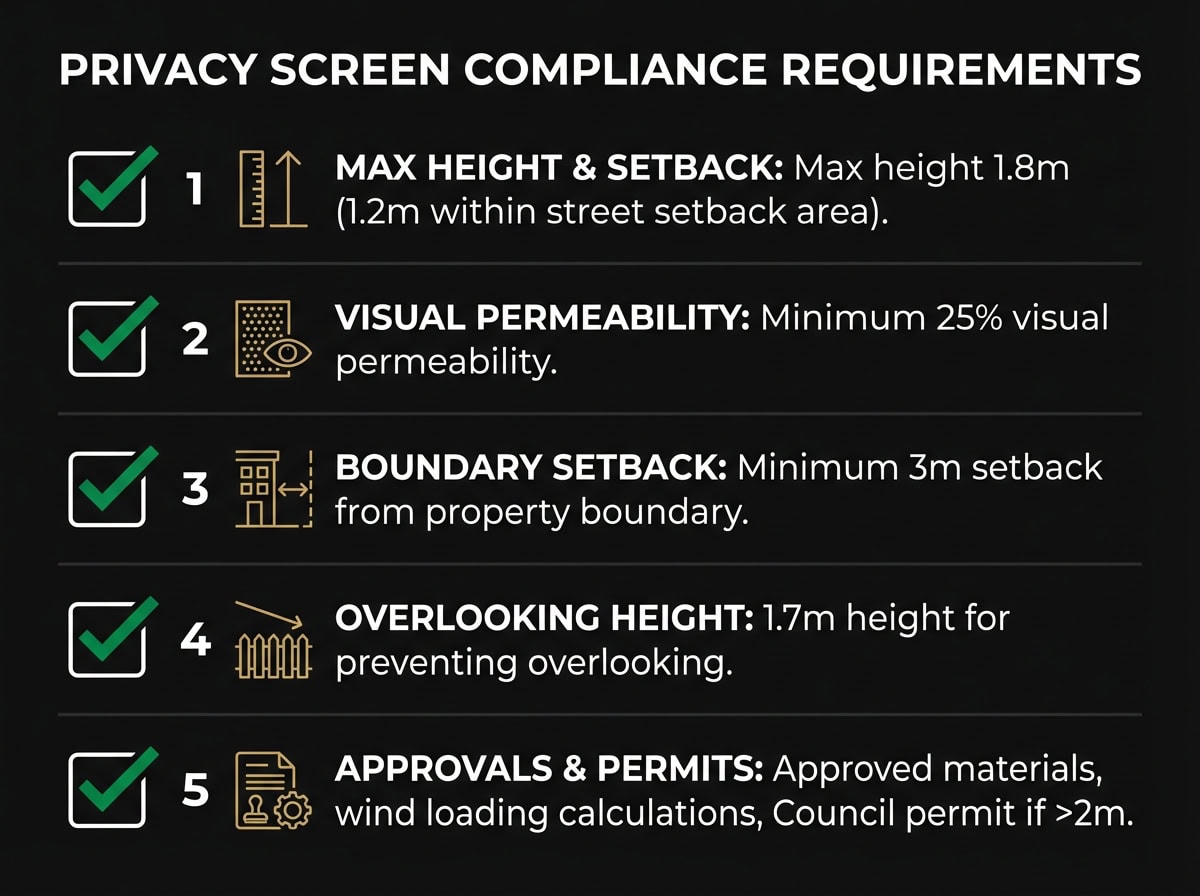
Privacy screens cannot exceed 1.8 metres in height when measured from natural ground level in most residential zones. Screens positioned within the primary street setback face additional restrictions, typically limited to 1.2 metres to maintain streetscape character and sightlines.
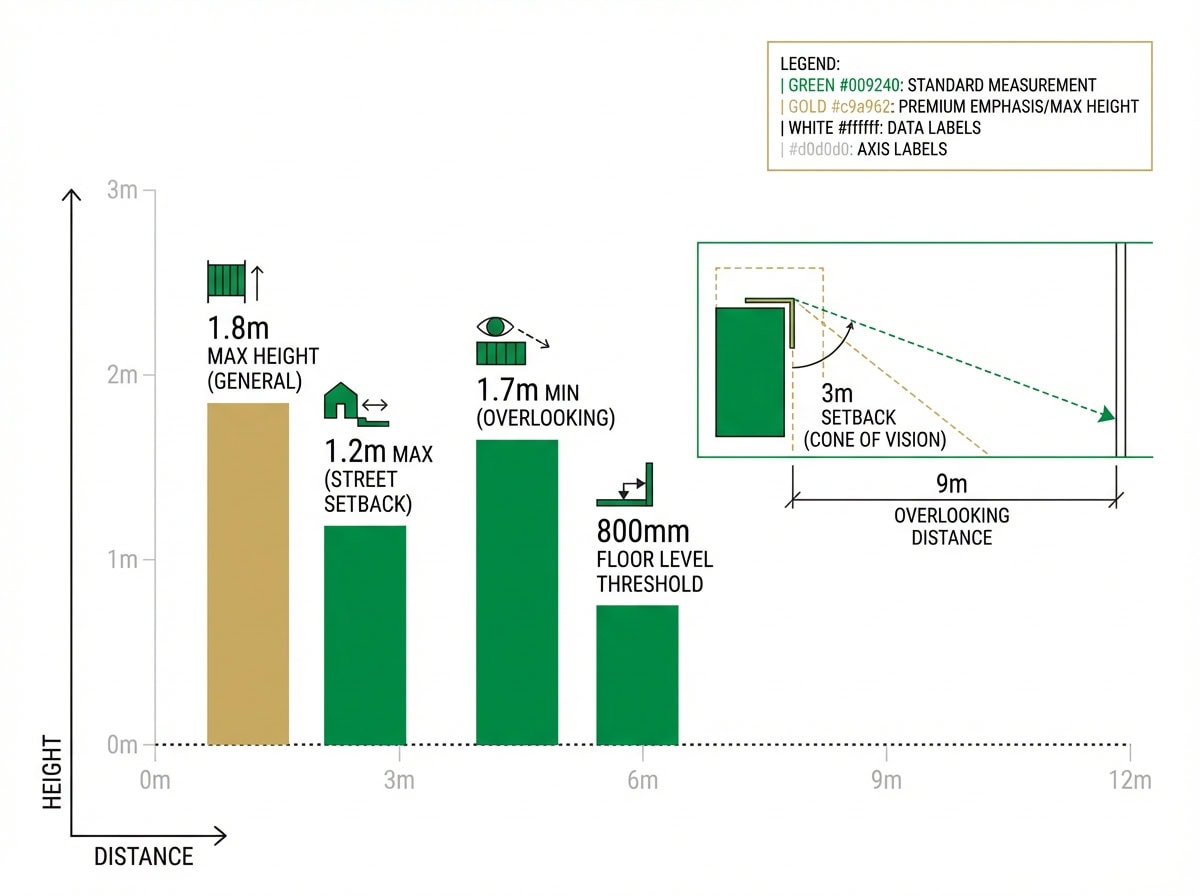
The cone of vision rule applies to windows and balconies, requiring screens to be set back at least 3 metres from the property boundary or neighbouring habitable room windows. This prevents screens from blocking natural light or creating an oppressive visual impact on adjacent properties.
Local planning overlays may impose stricter height limits in heritage areas or environments with specific design guidelines. Property owners should verify their zone requirements through Victorian legislation before installation.
Visual Permeability Standards
Screens must achieve a minimum of 25% visual permeability when viewed directly at eye level. This standard ensures passive surveillance of public spaces while providing adequate privacy for residents.
Fixed louvres and slatted designs typically meet permeability requirements when slats are angled between 30 to 45 degrees. The spacing between slats should allow partial visibility through the screen while obscuring direct views into private areas.
Solid screens exceeding the permeability threshold require planning permits in most cases. Obscure glazing can satisfy permeability standards if it maintains translucency while preventing clear views, though it must be permanently fixed rather than adjustable.
Material Guidelines for Privacy Screens
Approved materials include timber, aluminium screens, powder-coated steel, and treated composite materials that withstand Victorian weather conditions. Materials must be durable, non-reflective, and compatible with the existing building design.
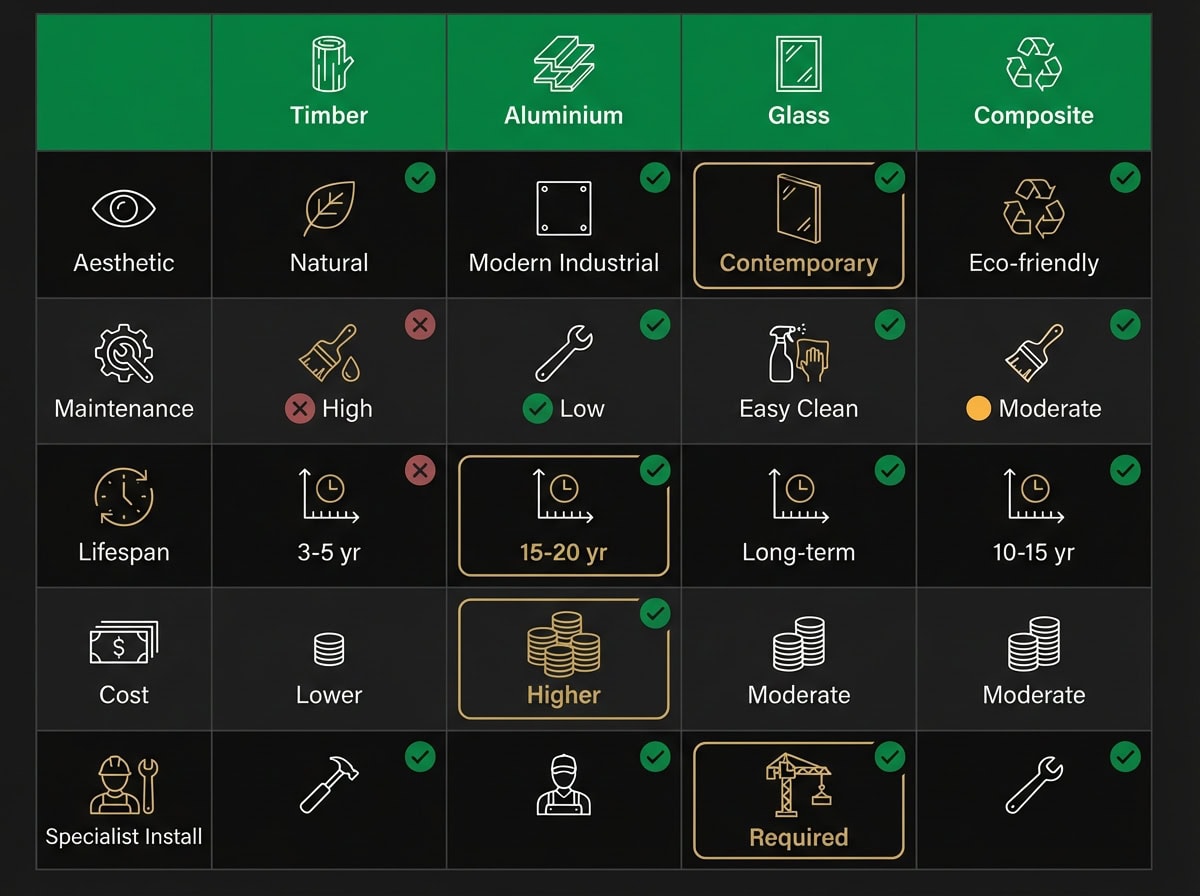
Aluminium screens remain popular due to their longevity and low maintenance requirements. They must feature non-reflective finishes in neutral tones that complement surrounding structures. Timber screens require treatment against rot and termites, with regular maintenance obligations.
Prohibited materials include reflective surfaces that create glare, temporary barriers like shade cloth on permanent frames, and materials that deteriorate rapidly. All fixings must be concealed or finished to professional standards, with structural integrity verified by a qualified builder or engineer.
Boundary Fence and Overlooking Building Regulations
Boundary fences and privacy screens in Victoria must comply with specific distance requirements and overlooking provisions under the Building Regulations 2018. These rules determine where structures can be placed, what heights trigger permit requirements, and how to minimize visual intrusion into neighboring properties.
Boundary Distance and Setbacks
A boundary fence can typically be constructed directly on the property line without setback requirements. However, privacy screens that exceed certain heights may need to be positioned with consideration for sightlines and neighboring amenity.
Standard residential fences under 2 meters generally do not require setbacks from the boundary. Structures exceeding this height often trigger additional scrutiny from local councils. The specific distance requirements vary based on the fence’s purpose, materials, and location relative to streets or laneways.
Property owners should verify their local council’s specific setback requirements before installation. Some municipalities impose stricter rules for corner blocks or properties adjacent to public spaces. Front fences facing streets may have different height and setback regulations compared to side or rear boundaries.
Overlooking Guidelines and Privacy
Overlooking building regulations establish minimum standards to protect privacy between adjoining properties. A window or balcony creates an overlooking concern when its floor level sits more than 800 mm above ground level at the boundary.
Privacy screens must provide adequate visual obstruction to minimize direct sightlines into habitable rooms and private open spaces. The regulations distinguish between boundary markers and privacy screens, with different requirements applying to each structure type. Screens designed solely for visual obstruction face stricter transparency and placement rules.
Measurement of overlooking distances typically occurs from the window or raised platform to the nearest point of the neighboring property boundary. Exemptions apply when the floor level remains below the 800 mm threshold. Property owners can address overlooking through strategic fence placement, screening materials, or vegetation buffers.
Council Approval and Permit Processes
Building permits become necessary when privacy screens or fences exceed standard height limits or fail to meet specific planning and building compliance standards. Most councils require applications for structures over 2 meters in residential zones.
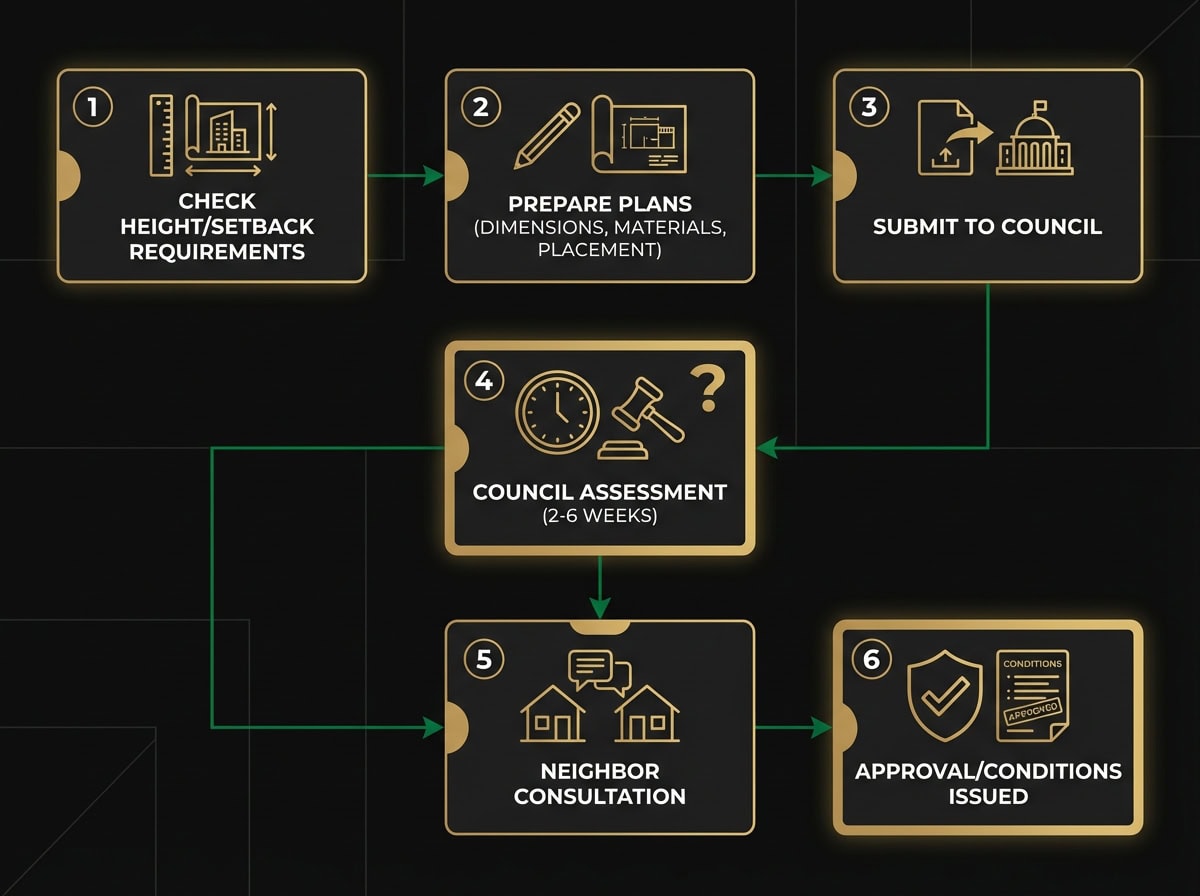
The permit process involves submitting detailed plans showing fence dimensions, materials, and exact placement. Councils assess applications against local planning schemes and the Building Regulations 2018. Processing times vary by municipality but typically range from two to six weeks.
Report and consent from the relevant council must be obtained for designs that do not comply with standard overlooking provisions. Applicants should include elevation drawings, site plans, and specifications for screening materials. Consultation with affected neighbors often strengthens applications and reduces potential objections.
Design and Material Options for Privacy Screens
Property owners can select from various privacy screen materials and configurations to meet both functional requirements and aesthetic preferences. The choice between fixed louvres, glazing solutions, and aluminium systems depends on factors like budget, maintenance needs, and the desired level of visibility control.
Fixed Louvres and Slats
Fixed louvre systems provide consistent privacy coverage through horizontal or vertical blade arrangements. Aluminium privacy screens typically feature 50mm or 65mm slats as standard sizing options.
Angled slats create directional visibility, allowing views in one direction while blocking sightlines from another angle. Elliptical louvre blades offer similar one-way visibility benefits with enhanced visual appeal.
Timber slats deliver a natural aesthetic but require more frequent maintenance than metal alternatives. Powder-coated aluminium and composite panels resist weathering better while maintaining their appearance over time.
Spacing between slats affects both privacy levels and light transmission. Tighter spacing increases privacy but reduces natural light and airflow. Wider gaps allow more ventilation while still disrupting direct sightlines between properties.
Obscure Glazing and Glass Alternatives
Obscure glazing uses textured or frosted glass to blur visibility while maintaining light transmission. This option suits areas where natural light remains a priority alongside privacy requirements.
Privacy window films provide a retrofit solution for existing glass installations without full replacement. These films come in various opacity levels and decorative patterns to match different design preferences.
Frosted glass panels work well for bathroom windows and street-facing rooms where light penetration matters more than outward views. The material allows diffused natural light while preventing clear visibility from outside.
Perforated decorative panels offer a middle ground between solid screens and transparent glazing. The perforation patterns create visual interest while controlling sightlines based on hole size and spacing.
Aluminium Privacy Screen Features
Aluminium screens combine durability with minimal maintenance requirements compared to timber alternatives. The material resists rust, rot, and insect damage in Australian weather conditions.
Powder coating protects aluminium surfaces while providing extensive colour customisation options. Standard colours match common architectural palettes, while custom finishes coordinate with specific design schemes.
Weather-resistant materials ensure long-term performance with reduced upkeep needs. The lightweight nature of aluminium simplifies installation while maintaining structural integrity.
Pre-fabricated aluminium systems speed up installation timeframes compared to custom-built timber screens. Modular designs allow for easier repairs or modifications when property needs change over time.
Practical Considerations for Homeowners and Developers
Privacy screen installations require careful planning to meet regulatory requirements while achieving functional and aesthetic goals. Property owners must balance compliance obligations with design preferences and construction practicalities.
Balcony and Deck Privacy Compliance
Balconies and elevated decks present specific challenges under privacy screen regulations in Victoria. These outdoor spaces often create direct sightlines into neighboring properties, triggering mandatory screening requirements.
Screens must extend to a minimum height of 1.7 meters above the finished floor level of the balcony or deck. This measurement applies from the point where overlooking occurs, not necessarily from the balcony edge. Property owners should verify the specific viewing angles before installation.
Materials used for balcony privacy screens must provide adequate visual obstruction while maintaining structural integrity. Common compliant options include:
- Timber slat screens with gaps no wider than permitted
- Frosted or obscure glass panels meeting transparency standards
- Metal perforated screens with appropriate perforation density
- Louvered systems fixed at angles preventing direct views
Developers working with SQM Architects typically incorporate these elements during the design phase rather than retrofitting them later.
Integration With Building Design
Privacy screens work best when incorporated into the overall architectural concept from the earliest planning stages. Retrofitting screens after construction proves more expensive and may compromise the building’s visual coherence.
Architects should coordinate privacy screen placement with window locations, outdoor living areas, and neighboring property layouts. This approach minimizes the number of screens required while maximizing their effectiveness. The screens can serve dual purposes as design features and sun shading devices.
Material selection affects both compliance and aesthetics. Screens that complement the building’s facade materials create a unified appearance rather than looking like afterthoughts. Structural considerations include wind loading calculations and proper attachment methods to the primary building structure.
Choosing the Right Privacy Solution
Selecting appropriate privacy screens involves evaluating durability, maintenance requirements, and cost alongside regulatory compliance. Different materials offer distinct advantages for specific applications.
Timber screens provide natural warmth but require regular maintenance including sealing or painting every few years. Aluminum and steel options resist weathering better and need minimal upkeep, though they typically cost more upfront. Glass solutions offer contemporary aesthetics and easy cleaning but may require specialized installation.
Property owners should obtain written confirmation from suppliers that proposed screens meet the relevant standards before purchasing. This documentation proves valuable during building inspections and potential disputes with neighbors.
Trends and Future Developments in Privacy Screen Regulations Victoria
Victoria’s regulatory landscape for privacy screens continues to evolve with enhanced compliance frameworks and growing emphasis on sustainable design solutions. Property owners should anticipate more detailed guidelines around materials, installation standards, and environmental considerations.
Anticipated Regulatory Updates
The Victorian government is actively working to modernize building regulations to address contemporary privacy concerns and design innovations. The Victorian Planning Authority plays a key role in shaping planning frameworks that impact residential privacy requirements.
Recent regulatory reviews suggest stronger enforcement of existing privacy screen regulations, particularly around boundary setbacks and height restrictions. Local councils are expected to implement more detailed permit conditions that specify material durability standards and maintenance requirements.
Changes may also address the growing use of modern screening materials and technologies. Property owners should expect clearer guidelines on semi-transparent versus opaque screening options, with potential amendments to existing overlays in heritage and character areas.
Sustainable and Innovative Materials
Aluminium screens have gained prominence due to their durability, recyclability, and low maintenance requirements. These materials offer long-term value while meeting environmental standards that align with Victoria’s sustainability goals.
Powder-coated aluminium provides weather resistance and color stability without requiring frequent repainting. The material’s lightweight nature reduces installation complexity while maintaining structural integrity in varying weather conditions.
Recycled composite materials and sustainably sourced timber are emerging as viable alternatives. These options appeal to environmentally conscious property owners while potentially offering compliance advantages under updated green building initiatives.
Professional Consultation and Architectural Services
Engaging qualified professionals like SQM Architects ensures privacy screen designs comply with current regulations while anticipating future requirements. Experienced architects navigate complex planning overlays, covenant restrictions, and council-specific requirements that vary across Victorian municipalities.
Professional services provide detailed drawings and compliance documentation that streamline planning permit applications. Architects can identify potential issues before construction begins, saving time and reducing the risk of non-compliance penalties.
Consultation extends beyond initial design to include material selection advice and contractor coordination. This comprehensive approach helps property owners achieve privacy goals while maintaining property value and neighborhood character standards.
Frequently Asked Questions
Property owners in Victoria must navigate specific height requirements, balcony overlooking rules, and material standards when installing privacy screens. Understanding exemptions for heritage properties and potential penalties helps ensure compliance with Victorian building codes.
What are the current guidelines for residential privacy screen heights in Victoria?
Privacy screens in Victoria must generally be constructed to a minimum height of 1.7 metres above finished floor level when addressing overlooking issues. This measurement applies to windows, balconies, terraces, and decks that have sightlines to habitable room windows or private open space within 9 metres.
The height requirement ensures that a person standing at normal eye level cannot directly view into neighboring habitable areas. For ground-level screens along boundaries, different height limits may apply based on whether planning permit approval is required.
Privacy screen regulations in Victoria provide detailed guidance on measurement standards and acceptable configurations.
How do I comply with the privacy screen regulations for overlooking from balconies in Victoria?
Balcony privacy screens must prevent direct views into neighboring properties within the specified 9-metre distance threshold. The screens need to extend from the balcony floor to at least 1.7 metres high and cover the full width of any area where overlooking could occur.
Permanent fixed screens are typically required rather than movable or temporary solutions. The screening must be in place before occupancy of the building and maintained throughout the life of the structure.
Screens can be attached to balustrades, walls, or installed as freestanding panels provided they meet the minimum opacity and height standards.
Are there any exemptions to the privacy screen regulations for heritage-listed properties in Victoria?
Heritage-listed properties may receive exemptions or modified requirements when installing privacy screens would compromise the building’s historical integrity or architectural significance. Applications for exemptions must be submitted to the relevant heritage authority along with detailed justification.
The approval process typically requires consultation between heritage advisors and building surveyors to find solutions that balance privacy needs with heritage conservation. Alternative screening methods such as landscaping or modified placement may be approved instead of standard fixed screens.
Property owners should consult with their local council’s heritage department before commencing any privacy screen installation on heritage-listed sites.
What materials are approved for the construction of privacy screens under Victorian building regulations?
Victorian building regulations do not prescribe specific materials for privacy screens but require that chosen materials meet structural safety standards and weather resistance requirements. Common approved materials include timber battens, frosted glass, perforated metal panels, louvered aluminum, and fiber cement sheets.
Materials must achieve at least 75% opacity to prevent direct views while allowing some light transmission and air circulation. The screening system must be securely fixed to withstand wind loads and other environmental stresses as specified in the Building Code of Australia.
All materials used in construction must comply with Australian Standards for durability and fire resistance where applicable.
How can I ensure my privacy screen meets both the safety and privacy requirements as per the Victorian building codes?
A building surveyor should review privacy screen designs before construction to verify compliance with both privacy standards and structural safety requirements. The design must address wind loading calculations, fixing methods, and material specifications appropriate for the location and height.
Balustrade regulations apply when privacy screens also function as fall protection barriers. In these cases, the screen must meet the minimum 1 metre height requirement for balustrades and pass loading tests for horizontal and vertical forces.
Documentation including engineering certificates may be required for screens exceeding certain heights or spans. Engaging a qualified building designer or architect helps ensure all regulatory requirements are addressed in the initial design phase.
What are the penalties for non-compliance with the privacy screen regulations in Victoria?
Local councils can issue building notices requiring property owners to install compliant privacy screens or modify non-compliant installations within a specified timeframe. Failure to comply with these notices may result in fines and further enforcement action.
Penalties vary depending on whether the breach involves planning permit conditions or building code violations. Victorian privacy legislation and building regulations establish the framework for enforcement actions.
In some cases, councils may undertake rectification works at the owner’s expense if compliance notices are ignored. Neighbors affected by non-compliant screens may also pursue civil remedies through VCAT for privacy breaches.
Disclaimer: This guide provides general information about privacy screen regulations in Victoria. Specific requirements may vary by council and property circumstances. SQM Architects recommends consulting with qualified professionals and your local council before commencing any privacy screen installation to ensure full compliance with current regulations.
SQM Architects – ABN 32 600 928 390, ARBV Reg. No. 51498