Understanding Victorian Box Gutter Requirements
Box gutters remain one of the most scrutinised elements in Victorian residential development. With the Building and Plumbing Commission (BPC) now established as of 1 July 2025, property developers face updated compliance requirements that directly impact project timelines and costs. Understanding these regulations isn’t optional—non-compliant box gutters could trigger rectification orders under the Building Legislation Amendment (Buyer Protections) Act 2025, potentially delaying occupancy and affecting your development’s financial performance.
This guide provides actionable information on box gutter design, installation, and compliance requirements for developers working across Melbourne. Whether you’re planning a two-lot subdivision in Whitehorse or a multi-unit development in Boroondara, these regulations may apply to your project depending on design and location.
Own a block in Melbourne?
Your land may be worth more than the house on it — see what your block could fit.
Many established Melbourne blocks may support a second dwelling, dual occupancy or subdivision under current planning rules. SQM’s free screener checks your address against zoning and lot-size rules in about 60 seconds.
Check my block — freeFree indicative screening based on public planning data. Results are general information, not planning or financial advice.
What Qualifies as a Box Gutter in Victoria
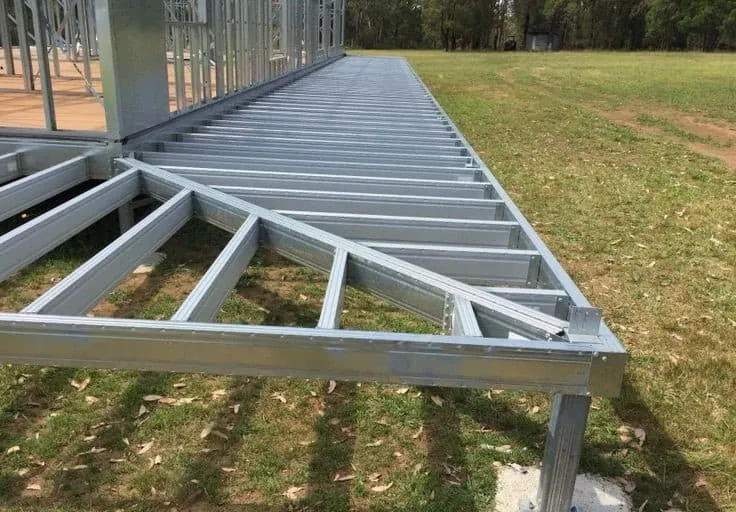
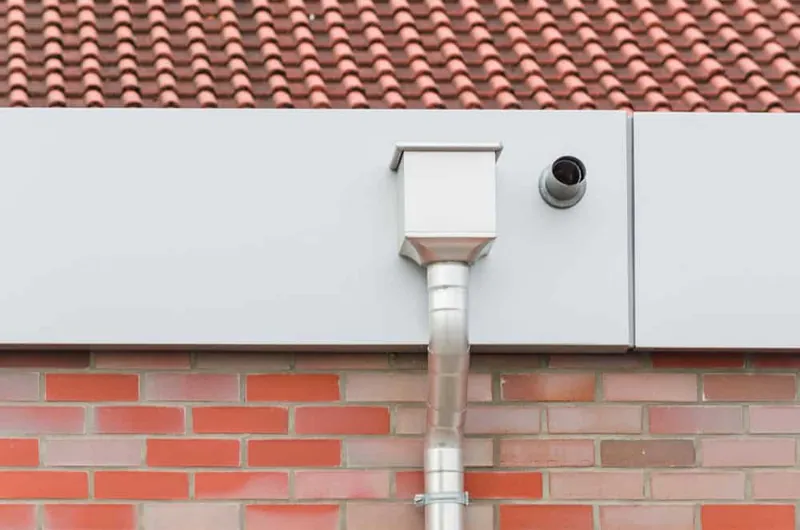
The BPC defines a box gutter as a graded channel, generally rectangular in shape, for conveying rainwater within the building footprint. This includes gutters adjacent to walls or parapets. Box gutters differ from standard eaves gutters in three critical ways: they sit within the building envelope, require specific overflow protection, and must be installed by licensed roofing plumbers.
Common box gutter configurations in residential developments include:
- Internal valley gutters between intersecting roof planes
- Parapet gutters (box gutters with lears) where roofs abut boundary walls
- Concealed gutters behind fascias in contemporary designs
- Shared boundary gutters in townhouse developments
V-shaped gutters are explicitly prohibited under current regulations. These configurations create permanent ponding, accelerate localised corrosion, and often experience premature failure. If your architect has specified V-gutters, request a compliant box gutter design before construction commences.
Deemed-to-Satisfy Requirements Under AS/NZS 3500.3
Box gutters must comply with AS/NZS 3500.3 (Plumbing and Drainage Part 3: Stormwater Drainage) and AS/NZS 3500.5 (House Installations). The BPC’s deemed-to-satisfy (DtS) pathway provides clear parameters that, when followed, typically ensure compliance without requiring performance solution documentation.
Minimum Dimensions and Gradients
Box gutters in Victorian residential developments generally must meet these specifications:
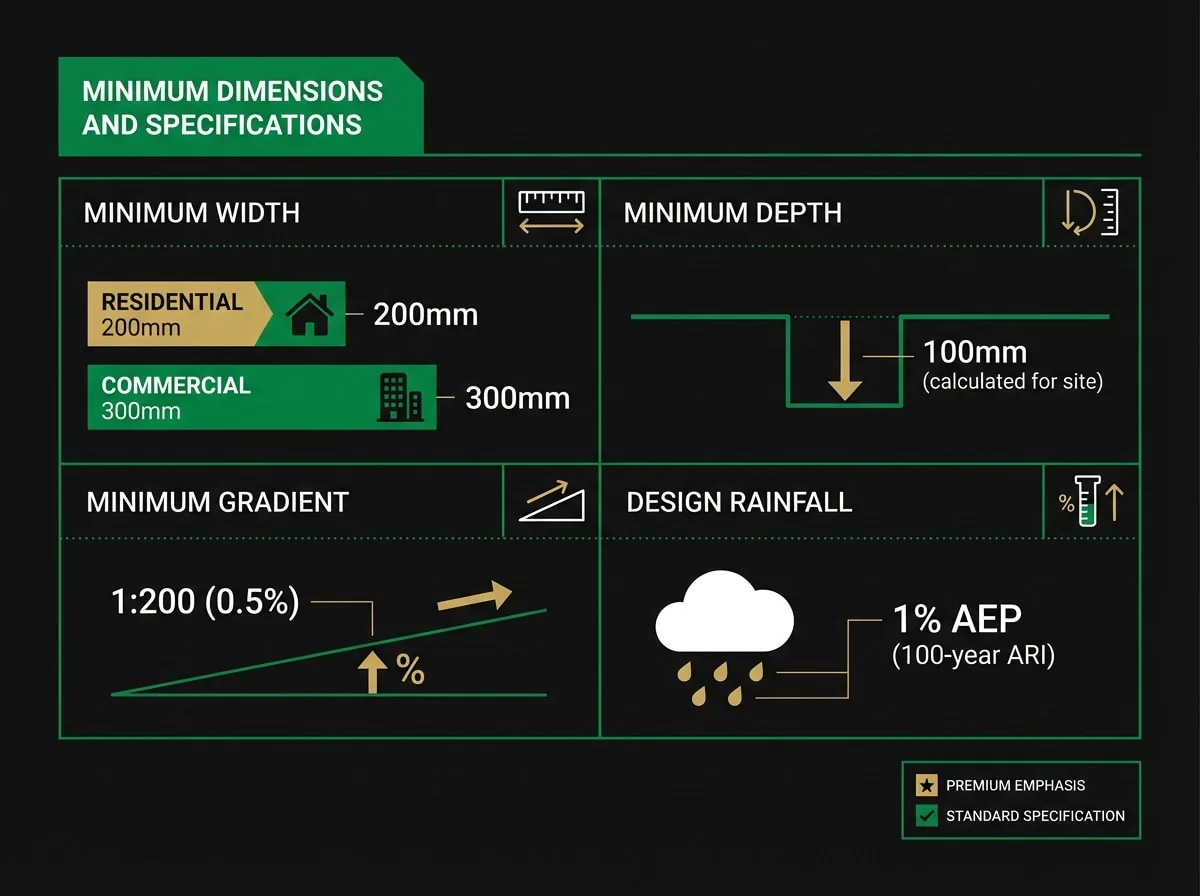
- Minimum width: Typically 200mm sole width (300mm for commercial applications)
- Minimum depth: Generally 100mm, though actual depth must be calculated based on specific rainfall intensity for your site
- Minimum gradient: Typically 1:200 (0.5%) for sole widths up to 600mm
- Design rainfall: Usually 1% Annual Exceedance Probability (100-year ARI)
The 100mm minimum depth cited in older guidance documents often proves inadequate when gutters are properly sized according to AS/NZS 3500.3 tables. For a typical 150m² roof catchment in Box Hill (rainfall intensity around 150mm/hr), depths may range around 125mm with a 200mm sole width. Your roofing plumber must calculate these dimensions—don’t rely on “standard” depths.
Layout and Configuration Requirements
Box gutters must be straight without changes in direction. This single requirement causes more compliance failures than any other factor. Your gutter cannot turn corners, discharge to the side, or incorporate bends. If your roof design requires water collection around corners, you’ll need multiple straight gutter runs discharging to separate sumps or rainheads.
The sole width cannot reduce towards the outlet unless depth increases proportionally. If you design at 200mm width, the gutter cannot narrow below 200mm at any point along its length.
Get the 7-point site check to run before committing to a permit application — zoning, overlays, setbacks and council red flags, in plain English. Free PDF, instant download.
- Zone, overlay & setback checks
- What council assesses first
- Permit-readiness red flags
Something went wrong. Please try again.
No spam. Unsubscribe anytime.
Check your inbox — your checklist is on its way.
Overflow Protection: Critical Compliance Element
Overflow devices prevent water entering the building during downpipe blockages—the primary cause of box gutter insurance claims. The BPC reports that inadequate overflow protection represents a significant proportion of box gutter compliance failures in residential developments.
Three Approved Overflow Methods
Rainheads: Must be left fully open above the overflow weir, typically positioned 25mm below the box gutter bottom. “Inverted pops”, Ned Kelly slots, round holes, and vertical chutes do not satisfy DtS requirements. Recent changes to HB 39 (Installation Code for Metal Roof and Wall Cladding) now mandate that rainheads remain visually open above the weir level—a requirement that has generated pushback from developers concerned about aesthetics.
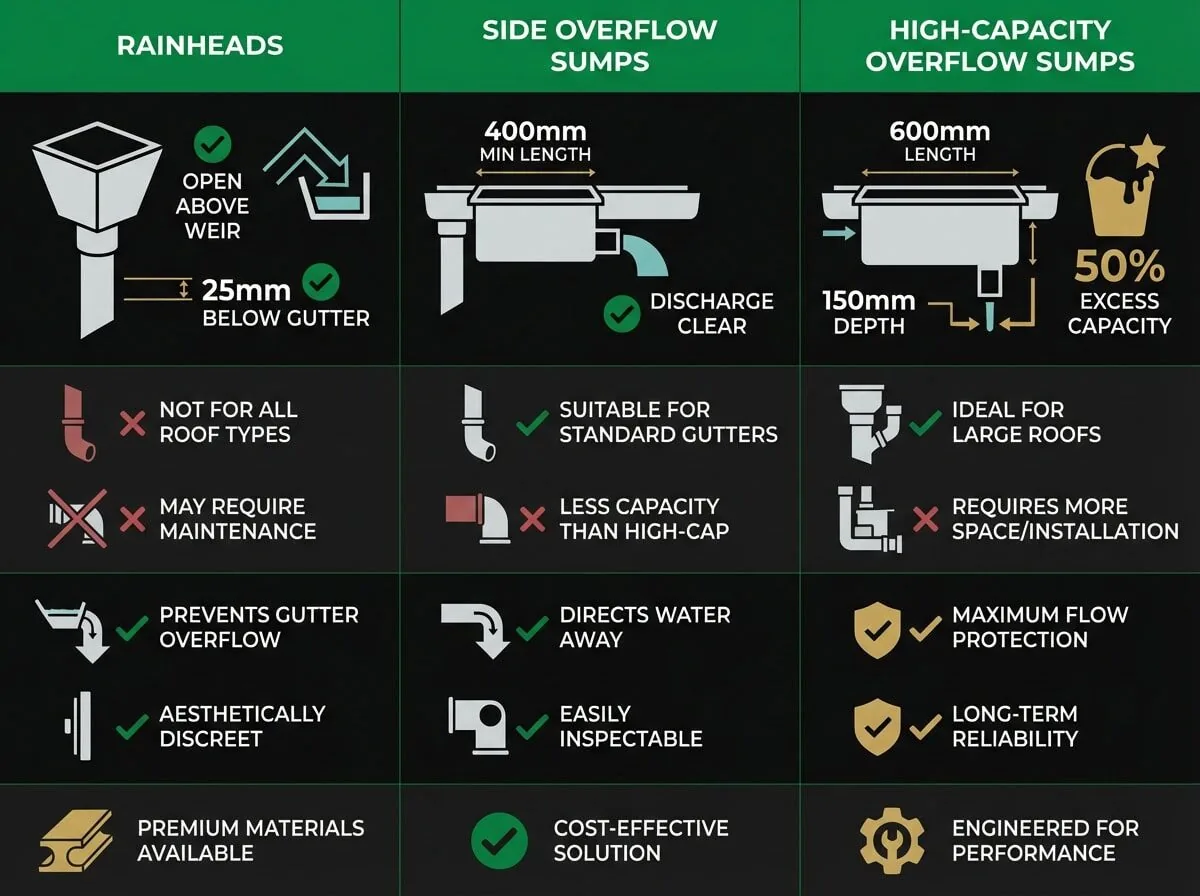
Sumps with side overflow: Generally minimum 400mm length, with overflow positioned to discharge clear of the building footprint, neighbouring properties, and public areas. Side overflows typically must have capacity equal to or greater than the downpipe they protect.
Sumps with high-capacity overflow: Usually fixed at 600mm length, minimum 150mm depth. High-capacity overflows typically must demonstrate hydraulic capacity exceeding the design rainfall event by at least 50%.
All overflow devices must discharge to atmosphere. Connecting overflows to stormwater systems defeats their purpose and creates compliance issues.
Expansion Provision Requirements
Metal roofing materials expand and contract with temperature variations—a 10-metre Colorbond box gutter can experience significant movement between winter and summer. Where the distance between fixed points exceeds 6 metres, you typically must incorporate expansion joints or sliding connections.
Common expansion methods include:
- Expansion joints with neoprene or EPDM seals at 6-metre intervals
- Sliding lap joints secured with pop rivets in slotted holes
- Flexible connections at rainhead/sump interfaces
Failure to provide adequate expansion provision may lead to gutter buckling, seal failure, and water penetration within a relatively short timeframe. This becomes particularly problematic in developments with long continuous box gutters serving multiple townhouses.
Support System Specifications
Box gutter support systems must be fabricated from materials compatible with the gutter material, resistant to UV degradation, and securely attached to the building structure. The system typically must support a uniformly distributed load of 1.5kPa plus a 1.4kN concentrated trafficable load at any point.
For Colorbond gutters, galvanised steel brackets are commonly used at maximum 900mm centres. Timber bearers are generally minimum 90x45mm treated pine or hardwood, with fall maintained across the full gutter length. Avoid using the box gutter as structural support for roofing—it’s a drainage element, not a structural member.
Installation and Certification Requirements
In Victoria, box gutter installation is regulated plumbing work that must be carried out and certified by appropriately licensed roofing plumbers. This distinguishes Victoria from other Australian states where box gutter work may be performed by unlicensed roofers.
The Self-Certification Challenge
Victoria’s self-certification regime means the installing plumber who lodges the Compliance Certificate takes responsibility for both design and installation. Many compliance failures occur when plumbers assume “certified plans” from building surveyors include compliant box gutter designs. They rarely do.
Building surveyor-approved plans typically show box gutter locations and approximate dimensions but seldom include calculations demonstrating compliance with AS/NZS 3500.3. As the developer, you should require your roofing plumber to provide written confirmation that the proposed design meets DtS requirements before construction commences.
Collaboration Requirements
Where roof framing doesn’t readily accommodate compliant box gutter installation, the issue must be referred to the designer, building surveyor, and builder before work proceeds. Altering structural elements to accommodate box gutters requires an amended building permit.
For developments in Manningham City Council or City of Boroondara where heritage overlays apply, box gutter modifications may trigger additional planning considerations. Address these during the design stage—not during construction.
Performance Solutions: When DtS Doesn’t Work
Some residential developments require performance solutions for box gutters due to architectural constraints, site conditions, or design preferences. Performance solutions must demonstrate that the proposed design achieves outcomes at least equivalent to DtS requirements.
When to Consider Performance Solutions
- Box gutters requiring changes in direction due to complex roof geometry
- Situations where open rainheads conflict with design intent
- Shared boundary gutters in zero-lot-line townhouse developments
- Concealed gutters where standard overflow provisions aren’t feasible
Performance solutions require documentation from qualified professionals (typically hydraulic engineers) demonstrating compliance with the Plumbing Code of Australia performance requirements. This documentation must be provided to the building surveyor and approved before installation commences.
Performance solutions typically involve additional documentation costs and approval time. Performance solutions should be identified during the planning permit stage—not discovered during construction.
Common Compliance Failures and How to Avoid Them
The BPC’s compliance inspection programme identifies recurring box gutter failures across Victorian residential developments. Understanding these patterns may help developers avoid costly rectification.
Top Five Compliance Failures
Changes in direction (most common): Box gutters turning corners or discharging to the side. Solution: Design multiple straight gutter runs with separate discharge points.
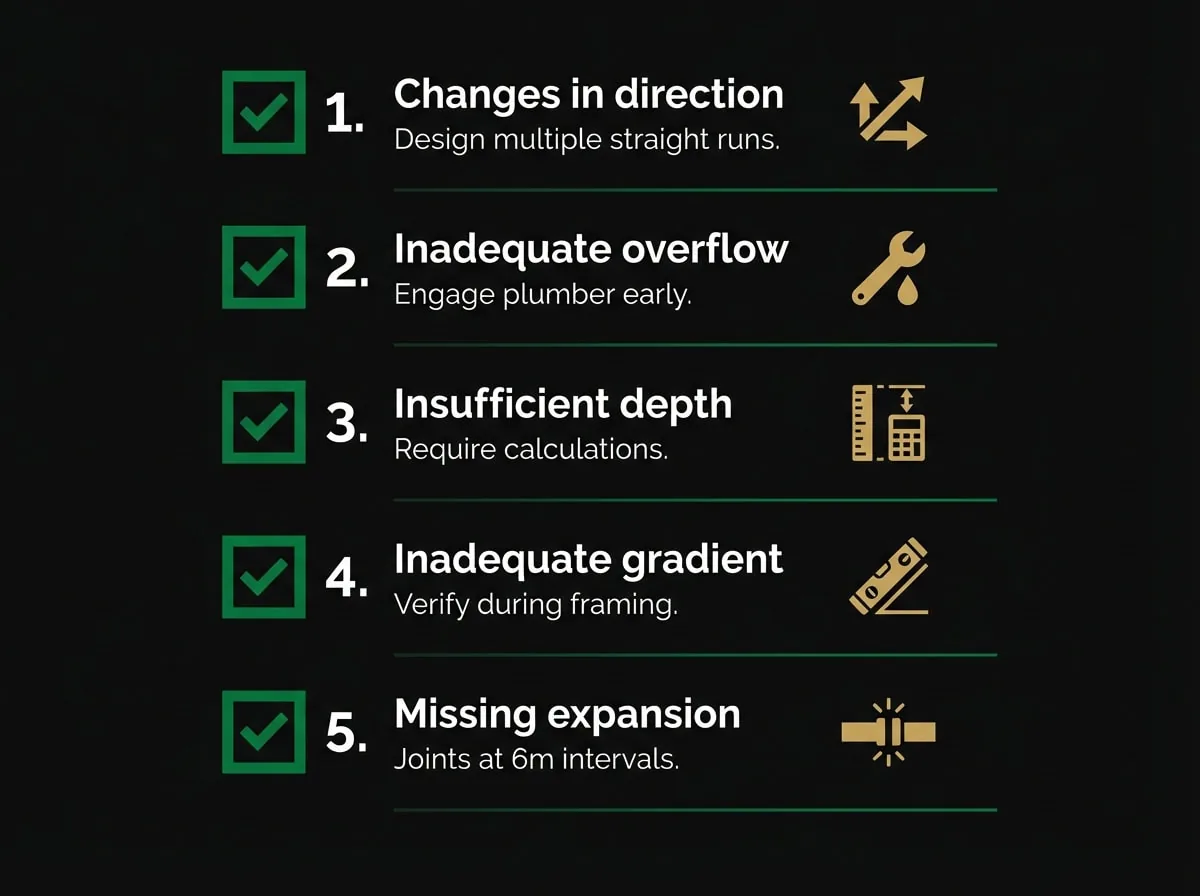
Inadequate overflow provision (frequently observed): Undersized overflows, overflows discharging within building footprint, or non-compliant rainhead configurations. Solution: Engage roofing plumber during design stage to specify compliant overflow devices.
Insufficient depth (common): Gutters sized using “standard” dimensions rather than calculated depths for specific rainfall intensity. Solution: Require calculations demonstrating compliance with AS/NZS 3500.3 tables.
Inadequate gradient (occasionally seen): Gutters installed flatter than 1:200 or with reverse falls creating permanent ponding. Solution: Verify gradient during framing inspection before gutter installation.
Missing expansion provision (less common): Long gutter runs without expansion joints. Solution: Incorporate expansion joints at 6-metre intervals during design.
Integration with Recent Planning Reforms
Recent planning reforms introduced through Amendment VC282 (effective 8 September 2025) and Amendment VC288 (effective 16 October 2025) streamline approval pathways for single dwellings and two-lot subdivisions. However, these reforms don’t alter box gutter compliance requirements.
VicSmart Pathway Implications
The new VicSmart pathway for single dwellings on lots under 300m² and two-lot subdivisions provides 10-business-day assessment timeframes. Box gutter compliance remains a building permit issue, not a planning permit consideration. However, the compressed VicSmart timeline means less time to identify and resolve box gutter design issues before construction.
For developments in the City of Whitehorse or City of Monash using VicSmart pathways, engage your roofing plumber during the planning permit stage. This ensures box gutter designs are compliant before you commit to the building permit application.
ResCode Updates and Box Gutter Setbacks
Updated Clause 54 standards (introduced via Amendment VC282) don’t directly regulate box gutters but affect where they can be located. Eaves, fascias, and gutters may encroach up to 500mm into side and rear setbacks. This provision applies to eaves gutters—box gutters within the building footprint aren’t subject to setback encroachment provisions.
Council-Specific Considerations Across Melbourne
While box gutter regulations are consistent across Victoria, local planning scheme provisions and council practices create variations in how developments incorporating box gutters are assessed.
City of Boroondara
Heritage overlays cover significant portions of residential land in Boroondara. Box gutters in heritage areas often require concealed configurations to maintain period character. Work with your architect and roofing plumber to develop compliant concealed gutter details during the planning permit stage. Boroondara’s heritage advisors may provide preliminary guidance on acceptable configurations.
City of Whitehorse
Whitehorse has high rates of multi-unit development, particularly in Box Hill and Burwood. Shared boundary box gutters serving multiple townhouses require careful design to ensure each dwelling has independent overflow protection. Whitehorse building surveyors typically request detailed box gutter drawings showing overflow discharge points before issuing building permits.
Manningham City Council
Sloping sites in Doncaster and Templestowe create challenges for box gutter overflow discharge. Overflows must discharge clear of downslope properties—a requirement that may necessitate extended overflow pipes or alternative overflow configurations. Address these issues during site analysis.
Cost Implications for Developers
Box gutter compliance affects development costs in several ways. Understanding these cost factors may help with accurate feasibility analysis.
Direct Installation Costs
Compliant box gutter systems may typically cost more than standard eaves gutters. Box gutters require more complex fabrication, specialised installation by licensed roofing plumbers, and additional components like rainheads or overflow sumps. For a typical three-townhouse development, box gutter systems could represent a material cost consideration in your construction budget.
Rainheads and overflow sumps add to project costs. High-capacity overflow sumps typically cost more than standard side overflow configurations. These costs may increase when performance solutions requiring custom fabrication are necessary.
Rectification Costs
Non-compliant box gutters discovered during building surveyor inspections or BPC compliance audits trigger rectification requirements. Under the Building Legislation Amendment (Buyer Protections) Act 2025, the BPC can issue rectification orders requiring builders and developers to fix non-compliant work, including after occupancy.
Rectification costs for box gutter non-compliance could be substantial depending on the extent of non-compliance, potentially including:
- Removal of non-compliant gutters and associated roofing
- Structural modifications to accommodate compliant configurations
- Reinstallation of compliant gutter systems
- Roof reinstatement and weatherproofing
- Project delays and holding costs
These costs don’t include potential claims from purchasers or owners corporations for water damage resulting from non-compliant installations.
Maintenance Requirements and Owner Education
Box gutters require more frequent maintenance than eaves gutters due to sumps and rainheads accumulating debris. As a developer, you should provide maintenance information to purchasers—this may reduce future liability and supports the new building manual requirements introduced under the Building Legislation Amendment (Buyer Protections) Act 2025.
Recommended Maintenance Schedule
- Quarterly inspection and cleaning of rainheads and sumps
- Six-monthly inspection of overflow devices to ensure clear discharge
- Annual inspection of gutter gradients and seal integrity
- Immediate clearing after severe weather events
For multi-unit developments, include box gutter maintenance in the owners corporation’s maintenance schedule. Professional box gutter maintenance involves ongoing costs that should be factored into owners corporation budgets.
Professional Design Considerations for Box Gutter Compliance
Successful box gutter compliance requires early collaboration between architects, roofing plumbers, and building surveyors. Developers should consider these process steps:
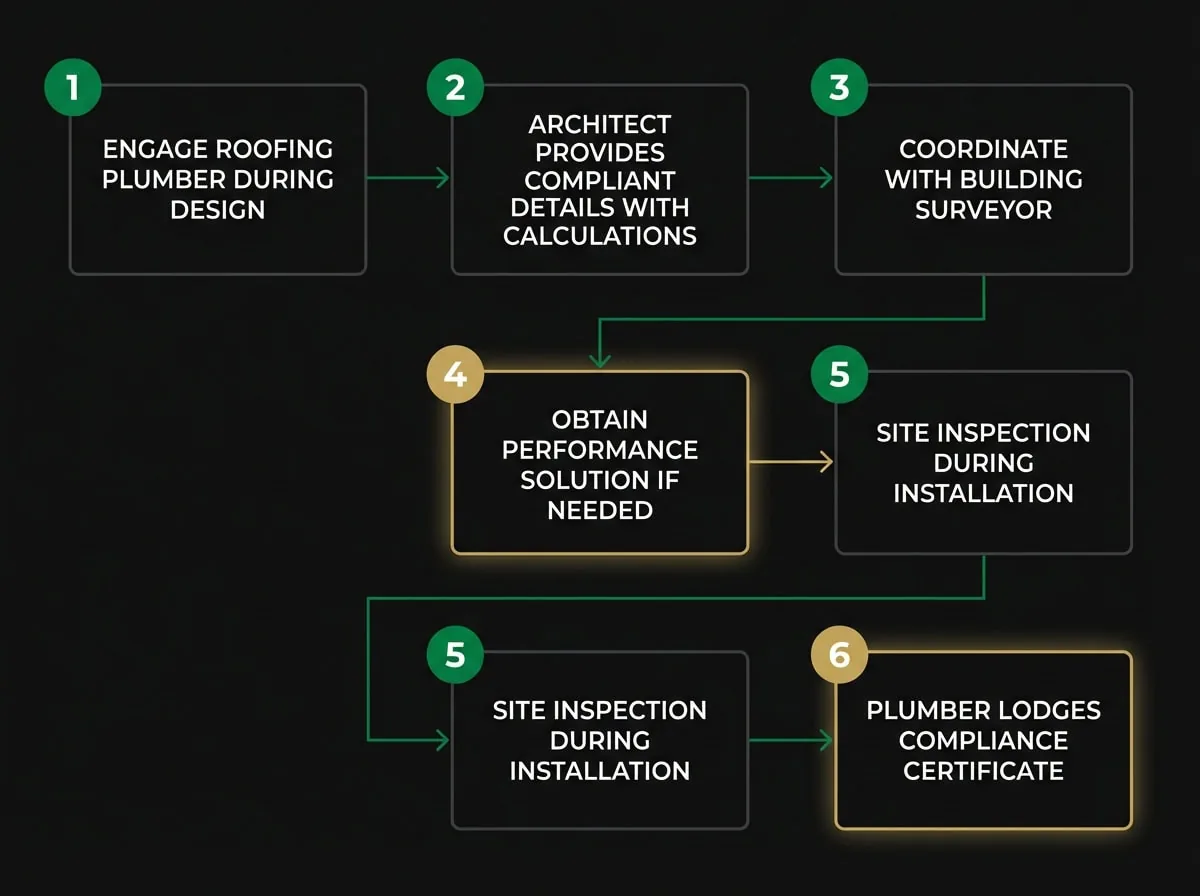
- Engage roofing plumbers during design development to review proposed configurations
- Ensure architectural documentation includes compliant box gutter details with calculations
- Coordinate with building surveyors to address compliance questions before permit application
- Obtain performance solution documentation when DtS pathways aren’t feasible
- Schedule site inspections during installation to verify compliance with approved designs
For developments in Knox City Council, Maroondah City Council, or City of Monash, understanding local council practices and building surveyor expectations may streamline the approval process. Experienced architectural practices can provide guidance on council-specific requirements and documentation standards.
Box Gutter Sizing in Victoria: What the Rules Require
Box gutters in Victoria are designed and sized under the plumbing standard AS/NZS 3500.3, which ties the required capacity to the roof catchment area and the local rainfall intensity — so there is no single fixed size. A larger roof, a more intense design storm, or a longer gutter run all increase the width and depth needed, and box gutters generally require a minimum fall plus an overflow provision to manage a blockage. Because the sizing is a hydraulic calculation specific to your roof and location, it is set during design rather than read from a standard table.
Related: building permit requirements.
Frequently Asked Questions About Box Gutters in Victoria
What’s the minimum depth required for box gutters in Victorian residential developments?
The minimum depth is typically 100mm, but actual required depth must be calculated based on rainfall intensity for your specific location and roof catchment area. Most residential box gutters in Melbourne may require 115-135mm depth when properly sized according to AS/NZS 3500.3.
Can box gutters turn corners in townhouse developments?
No. Box gutters must be straight without changes in direction under deemed-to-satisfy requirements. If your development requires water collection around corners, you’ll need multiple straight gutter runs discharging to separate sumps or rainheads, or pursue a performance solution with hydraulic engineering documentation.
Who is responsible for box gutter design compliance—the architect or the plumber?
The installing roofing plumber holds ultimate responsibility for design and installation compliance when lodging the Compliance Certificate. However, architects should provide compliant box gutter details in construction documentation, and developers should require written confirmation of compliance from the plumber before installation commences.
Do the new VicSmart planning reforms change box gutter requirements?
No. VicSmart reforms introduced through Amendments VC282 and VC288 streamline planning permit assessment but don’t alter building permit requirements for box gutters. Box gutter compliance remains governed by AS/NZS 3500.3 and the Plumbing Code of Australia regardless of planning pathway used.
What happens if the Building and Plumbing Commission finds non-compliant box gutters after occupancy?
Under the Building Legislation Amendment (Buyer Protections) Act 2025, the BPC can issue rectification orders requiring builders and developers to fix non-compliant work after occupancy. This may include full box gutter replacement, structural modifications, and compensation for any water damage that occurred due to non-compliance.
Are concealed box gutters with enclosed rainheads acceptable in heritage areas?
Enclosed rainheads don’t satisfy deemed-to-satisfy requirements under current HB 39 provisions—rainheads must be left open above the overflow weir. For heritage developments requiring concealed gutters, you’ll need a performance solution demonstrating equivalent overflow protection. Engage a hydraulic engineer early in the design process.
How much should I budget for box gutter systems in a three-townhouse development?
Box gutter systems may typically cost more than standard eaves gutters due to specialised fabrication and installation requirements. Costs vary based on gutter length, overflow device type (rainheads or sumps), and whether performance solutions requiring custom fabrication are necessary. Obtain detailed quotes from licensed roofing plumbers during the design stage for accurate budgeting.
Conclusion
Box gutter compliance in Victoria requires careful attention to AS/NZS 3500.3 requirements, early collaboration between architects and roofing plumbers, and thorough understanding of deemed-to-satisfy parameters. With the Building and Plumbing Commission now empowered to issue rectification orders under the Building Legislation Amendment (Buyer Protections) Act 2025, ensuring compliance from the outset may protect your development timeline and financial performance.
For property developers working across Melbourne, the key to successful box gutter compliance is integration during the design stage—not discovery during construction. Engage qualified professionals early, require documented compliance confirmation, and budget appropriately for compliant systems.
Get Your Complimentary Site Assessment to evaluate box gutter requirements for your next development. Call SQM Architects on (03) 9005 6588 or visit our website to discuss your project with our team.
This article provides general information about Victorian building regulations for property developers. It does not constitute professional advice. For specific guidance on your project, contact SQM Architects (ARBV Reg. No. 51498) for a complimentary site assessment.