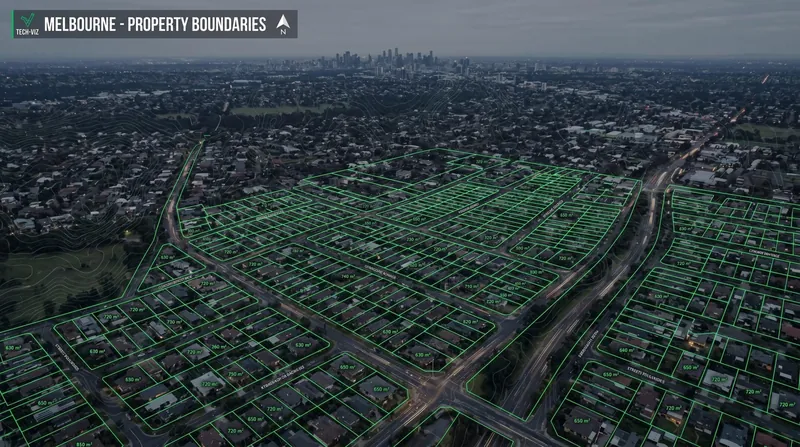
Why Clause 56 Matters for Melbourne Residential Subdivision
For property developers working across Melbourne, residential subdivision is one of the most reliable pathways to unlocking land value. Yet many developers — even experienced ones — underestimate how much the quality of their Clause 56 compliance work influences planning permit outcomes. Get the subdivision design standards right from the outset, and you reduce objections, accelerate assessment timelines, and protect your development margins. Get them wrong, and you face costly redesigns, VCAT appeals, and delays that erode development viability. For a broader overview of the subdivision process, see our guide on how to subdivide land in Victoria.
Clause 56 of the Victorian Planning Provisions sets out the design and development standards that apply to residential subdivision. It covers everything from lot layout and street design through to drainage, landscaping, and infrastructure servicing. Understanding how these standards interact with VicSmart — Victoria’s streamlined planning permit pathway for straightforward applications — is essential for developers who want faster, more predictable outcomes on smaller subdivision projects.
This guide outlines the key Clause 56 requirements, explains when VicSmart may be available as a pathway, and provides practical guidance on how developers working across the City of Whitehorse, City of Boroondara, City of Manningham, City of Monash, City of Knox, and Maroondah City Council can structure applications to achieve the best possible development outcomes.
What Clause 56 Actually Covers
Clause 56 — formally titled “Residential Subdivision” — is the primary design standard framework governing how land is subdivided for residential purposes in Victoria. It applies whenever a planning permit is required for residential subdivision, and it operates as a series of objectives and standards across multiple design categories. The responsible authority assesses applications against these standards, and where a proposal meets all of them, approval is generally more straightforward.
The clause is structured around a set of design objectives, each supported by a standard. The key categories include:
- Lot design: Minimum lot areas, dimensions, and orientation to support future dwellings
- Street design and connectivity: Road widths, footpaths, cycling infrastructure, and permeability of the street network
- Integrated water management: Stormwater treatment, drainage, and water sensitive urban design requirements
- Landscaping: Street trees, open space, and canopy coverage
- Infrastructure servicing: Access to reticulated services including power, water, sewerage, and telecommunications
- Site layout and orientation: Solar access, energy efficiency, and interface with adjoining properties
Each standard includes a default requirement, but Clause 56 also allows for alternative solutions — meaning a proposal that does not strictly meet a standard may still be approvable if it can be demonstrated that the relevant objective is achieved by another means. This flexibility is important for developers working with irregular lots, constrained sites, or infill subdivision in established suburbs. For a detailed reference on compliant residential development standards, see our ResCode Victoria developer’s reference.
VicSmart: The Fast-Track Planning Permit Pathway
VicSmart is a streamlined planning permit assessment process available for straightforward, low-impact applications in Victoria. Rather than following the standard permit process — which involves public notice, third-party objection rights, and a statutory assessment period of 60 days (after which a deemed refusal may apply), though assessments often take longer in practice — VicSmart applications are assessed within 10 business days by a single council officer, with no public notice and no third-party objection rights.
For residential subdivision, VicSmart may be available where the proposal meets specific criteria set out in the Victorian Planning Provisions. In general terms, VicSmart subdivision applications are those involving a small number of lots in circumstances where the planning scheme identifies the application as low-complexity. The most common VicSmart subdivision scenario in Melbourne is a two-lot subdivision of an existing residential property, where the land is in a General Residential Zone or Neighbourhood Residential Zone and no overlays trigger additional assessment requirements.
It is important to note that VicSmart eligibility is determined by the planning scheme provisions that apply to a specific site — not simply by the number of lots proposed. A two-lot subdivision on land affected by a Vegetation Protection Overlay, Heritage Overlay, or Significant Landscape Overlay, for example, would typically not qualify for VicSmart. Developers should always verify VicSmart eligibility against the specific controls applying to their site before preparing an application.
VicSmart vs Standard Planning Permit: Key Differences
- Assessment timeframe: VicSmart — 10 business days; Standard permit — 60-day statutory period (deemed refusal trigger), often longer in practice
- Public notice: VicSmart — no notice required; Standard permit — notice to adjoining owners and public generally
- Third-party objections: VicSmart — not permitted; Standard permit — objectors may appeal to VCAT
- Application fee: VicSmart applications attract a reduced fee structure
- Documentation requirements: VicSmart requires a simplified application package, though Clause 56 compliance must still be demonstrated
The 10-business-day assessment window is one of the most significant advantages for developers. On a straightforward two-lot subdivision, the difference between a VicSmart pathway and a standard permit process may represent two to four months of holding costs — a material impact on development margins, particularly in the current interest rate environment.
Get the 7-point site check to run before committing to a permit application — zoning, overlays, setbacks and council red flags, in plain English. Free PDF, instant download.
- Zone, overlay & setback checks
- What council assesses first
- Permit-readiness red flags
Something went wrong. Please try again.
No spam. Unsubscribe anytime.
Check your inbox — your checklist is on its way.
Clause 56 Standards That Most Commonly Affect Melbourne Subdivisions
While Clause 56 covers a broad range of design categories, certain standards tend to have the greatest practical impact on infill residential subdivision in Melbourne. Understanding these upfront allows developers and their architects to design lots that comply from the outset, rather than discovering issues during assessment.
Lot Size and Dimensions
Clause 56 sets out minimum lot area and dimension requirements that interact with the zone controls applying to the land. In the Neighbourhood Residential Zone, minimum lot sizes are typically more restrictive than in the General Residential Zone, and some councils have applied local variations through their planning scheme. City of Manningham and City of Boroondara, for example, have planning scheme provisions that reflect the established character of their residential areas, which may influence the minimum lot sizes that are considered appropriate in practice, even where a proposal technically meets the Clause 56 standard.
Lot dimensions — particularly frontage width and depth — are also critical. A lot that meets the minimum area requirement but has an awkward shape or insufficient frontage may not be capable of supporting a dwelling that meets ResCode requirements, which can create downstream complications when the lot is developed. Designing lots with future development in mind is a key part of good subdivision practice. Developers should also be aware of common mistakes in Victoria land subdivision that can affect lot viability at this stage. Where a subdivision is intended to support a dual occupancy outcome, our guide to dual occupancy in Melbourne covers the relevant site requirements and planning guidelines.
Street and Access Design
For subdivisions involving new streets or shared accessways, Clause 56 sets out requirements for road widths, footpath provision, and connectivity. In established suburban contexts — which characterise much of the City of Whitehorse, City of Monash, and City of Knox areas — most infill subdivisions do not involve new public streets. However, shared driveway and access arrangements for rear lots are common, and these must comply with the relevant Clause 56 standards for access design, including width, gradient, and surface treatment.
Integrated Water Management
Water sensitive urban design requirements under Clause 56 are increasingly significant in Melbourne subdivisions. Melbourne Water’s drainage standards apply across the region, and councils have varying requirements for on-site stormwater detention, rainwater reuse, and treatment before discharge. For subdivisions in areas with existing drainage constraints — which applies to parts of Maroondah City Council and City of Knox in particular — early engagement with drainage engineers is strongly advisable to avoid late-stage redesign.
Landscaping and Canopy Cover
Clause 56 includes requirements for street tree planting and landscaping in new subdivisions. In the context of infill subdivision in established suburbs, these requirements interact with council-specific canopy cover policies and, in some cases, Vegetation Protection Overlays. City of Boroondara and City of Manningham both have strong canopy protection policies that can affect lot layout — particularly where significant trees are present on the site or on adjoining properties. Understanding neighbourhood character standards is equally important; our guide to neighbourhood character standards for planning applications in Victoria provides further detail on how these policies are applied.
How Councils in Melbourne Apply Clause 56
While Clause 56 is a state-wide standard, its application is not uniform across councils. Each responsible authority brings its own local policies, design guidelines, and assessment culture to the process. Developers who understand these local variations are better positioned to prepare applications that meet council expectations and avoid unnecessary requests for further information.
The City of Whitehorse has a well-established residential character policy that informs how Clause 56 standards are interpreted in practice. Applications that demonstrate sensitivity to neighbourhood character — including lot orientation, setbacks, and landscaping — tend to progress more smoothly through assessment. The City of Boroondara is known for thorough assessment processes, particularly in heritage and significant landscape areas, and applications in these areas are unlikely to be eligible for VicSmart regardless of lot numbers.
City of Knox and Maroondah City Council cover areas with a mix of established residential suburbs and newer growth precincts, and the applicable zone controls vary significantly across each municipality. Developers working in these areas should carefully check the zone and overlay controls applying to their specific site before making assumptions about VicSmart eligibility or Clause 56 requirements. City of Monash has significant activity centre precincts where higher-density subdivision may be contemplated, and the applicable controls in these areas differ from standard residential zones.
SQM Architects has completed over 210 residential subdivision and development projects across Melbourne, and our experience is that early pre-application engagement with the responsible authority — even for VicSmart applications — consistently helps identify council-specific expectations before significant design investment is made.
Preparing a Strong Clause 56 Application
Whether you are pursuing a VicSmart pathway or a standard planning permit, the quality of your Clause 56 compliance documentation is a key determinant of assessment speed and outcome. A well-prepared application demonstrates that the proposal meets each relevant standard — or provides a clear alternative solution where it does not — and reduces the likelihood of requests for further information that extend assessment timelines. Our guide to architectural planning drawings for planning permits covers the documentation requirements in detail.
Key Documents for a Clause 56 Subdivision Application
- Subdivision plan: Prepared by a licensed land surveyor, showing proposed lot boundaries, dimensions, areas, and easements
- Clause 56 assessment table: A systematic response to each applicable standard, demonstrating compliance or providing an alternative solution
- Drainage and servicing report: Prepared by a civil engineer, addressing stormwater management, drainage, and infrastructure servicing
- Landscape plan: Showing proposed street trees, landscaping, and canopy coverage where required
- Title documents: Current title, including any existing easements or covenants that may affect the subdivision
- Referral authority responses: For VicSmart applications, some referrals (such as to Melbourne Water) may still be required depending on site-specific triggers
For VicSmart applications specifically, the documentation package should be concise and targeted. The responsible authority is assessing against a defined set of criteria within a 10-business-day window, and a clear, well-organised application package supports efficient assessment. Overly complex or incomplete applications are a common cause of VicSmart applications being converted to the standard permit process — which negates the key benefit of the pathway.
Common Reasons VicSmart Applications Are Rejected or Converted
- Site is affected by an overlay that removes VicSmart eligibility
- Application documentation is incomplete or does not address all required matters
- Proposal does not meet the specific VicSmart criteria in the planning scheme
- Referral authority responses are outstanding at the time of lodgement
- The responsible authority determines the application raises issues requiring standard assessment
From Planning Permit to Statement of Compliance: The Full Subdivision Process
Obtaining a planning permit is the first major milestone in a residential subdivision, but it is not the final step. Once a planning permit is issued, developers must satisfy all permit conditions before a Statement of Compliance can be issued by the responsible authority. The Statement of Compliance is the document that enables the plan of subdivision to be registered with Land Use Victoria — the step that legally creates the new lots.
Permit conditions for Clause 56 subdivisions typically require the completion of infrastructure works (drainage, servicing, landscaping) and the provision of engineering certifications before the Statement of Compliance is issued. In some cases, conditions may allow works to be bonded rather than completed prior to the Statement of Compliance, which can assist with development sequencing and cash flow. The availability of bonding arrangements varies between councils and depends on the nature of the works required.
The timeframe from planning permit to Statement of Compliance varies significantly depending on the complexity of the subdivision and the extent of infrastructure works required. For a straightforward two-lot subdivision with minimal infrastructure requirements, the process from planning permit to registered title may be achievable within three to six months. More complex subdivisions involving new streets, significant drainage works, or staged delivery will typically take longer.
Based on SQM Architects’ project experience across 210+ Melbourne developments, the most common cause of delay between planning permit and Statement of Compliance is incomplete or non-compliant civil works — an outcome that is largely avoidable with thorough upfront engineering design and clear communication between the project team and the responsible authority.
Practical Tips for Developers
- Check VicSmart eligibility before designing: Confirm whether your site and proposal qualify for VicSmart before investing in detailed design. A quick review of the planning scheme controls applying to the land — including all overlays — will clarify eligibility.
- Engage a surveyor early: The subdivision plan is a foundational document, and early surveyor involvement helps identify title issues, easements, and lot configuration options before design is locked in.
- Address drainage upfront: Drainage and servicing requirements are a common source of delay. Engaging a civil engineer at the pre-application stage allows drainage solutions to be integrated into the subdivision design from the outset.
- Consider future development potential: Design lots with the end use in mind. A lot that technically meets Clause 56 minimums but cannot practically accommodate a compliant dwelling under ResCode may be difficult to sell or develop.
- Pre-application meetings add value: Even for VicSmart applications, a brief pre-application discussion with the responsible authority can clarify expectations and reduce the risk of requests for further information during assessment.
- Document alternative solutions clearly: Where your proposal does not strictly meet a Clause 56 standard, prepare a clear written justification demonstrating how the relevant objective is achieved. Vague or unsupported alternative solutions are a common cause of assessment delays.
Frequently Asked Questions
What is the difference between Clause 56 and ResCode?
Clause 56 applies to the subdivision of land — it governs how lots are designed and serviced. ResCode (Clause 54 and Clause 55 of the Victorian planning scheme) applies to the construction of dwellings on those lots. Both sets of standards are relevant to residential development, but they apply at different stages: Clause 56 at subdivision, ResCode at dwelling construction.
Does every residential subdivision in Melbourne require a planning permit?
Not necessarily. Some subdivisions — such as the subdivision of a lot in accordance with a registered plan of subdivision or certain boundary realignments — may not require a planning permit. However, most residential subdivisions creating new lots in established suburban areas will require a planning permit. The specific trigger depends on the zone and overlay controls applying to the land, and it is advisable to confirm permit requirements with the responsible authority or a planning professional before proceeding.
How long does a VicSmart subdivision application take?
VicSmart applications are required to be assessed within 10 business days of lodgement, provided the application is complete and all required information is provided. In practice, the total elapsed time from application preparation to permit issue — including pre-application work and any conditions — may be four to eight weeks for a straightforward two-lot subdivision. This compares favourably with standard planning permit processes, which often take four to six months or longer in Melbourne.
Can I use VicSmart for a three-lot subdivision?
VicSmart eligibility for subdivision is determined by the specific criteria in the planning scheme, not simply by lot numbers. In most cases, VicSmart is available only for two-lot subdivisions meeting specific criteria. Three-lot and larger subdivisions generally require a standard planning permit. However, the applicable criteria vary between planning schemes and zones, so it is worth checking the specific provisions applying to your site.
What happens if my Clause 56 application does not meet a standard?
Clause 56 allows for alternative solutions where a proposal does not meet a specific standard but can demonstrate that the relevant objective is achieved by other means. The responsible authority has discretion to approve an alternative solution, and a well-prepared written justification is essential. Where an alternative solution is proposed, early discussion with the responsible authority is advisable to gauge the likelihood of acceptance before finalising the application.
Do I need a planning permit and a building permit for subdivision?
Planning permits and building permits are separate approvals. A planning permit authorises the subdivision in principle and sets out conditions. A building permit may be required for any associated construction works (such as retaining walls or drainage infrastructure). The plan of subdivision also requires certification by a licensed surveyor and registration with Land Use Victoria before new titles are created. A Statement of Compliance from the responsible authority is required before registration can occur.
How do overlay controls affect Clause 56 subdivision applications?
Overlay controls — such as Vegetation Protection Overlays, Heritage Overlays, Significant Landscape Overlays, and Flood Overlays — can significantly affect both the substance of a Clause 56 application and its eligibility for VicSmart. Overlays may impose additional permit triggers, require additional documentation, or necessitate referral to external agencies. In some cases, overlays effectively preclude VicSmart eligibility regardless of the number of lots proposed. Always check all overlays applying to a site before determining the appropriate application pathway.
Conclusion
Clause 56 residential subdivision is a well-established pathway for Melbourne property developers, but achieving efficient, predictable outcomes requires a thorough understanding of the applicable standards, the VicSmart eligibility criteria, and the local variations that apply across Melbourne councils. Developers who invest in quality upfront design work — addressing Clause 56 compliance, drainage, servicing, and lot configuration before lodging an application — are consistently better positioned to achieve timely planning permit outcomes and progress smoothly to Statement of Compliance and registered title.
With 12+ years of experience delivering residential subdivision projects across the City of Whitehorse, City of Boroondara, City of Manningham, City of Monash, City of Knox, and Maroondah City Council, SQM Architects brings practical, site-specific knowledge to every subdivision project. Our strong track record of planning approvals across 210+ projects reflects a disciplined approach to Clause 56 compliance, VicSmart pathway assessment, and responsible authority engagement — giving developers a strong foundation for successful development outcomes.
Run the free Subdivision Screener — instantly check if any Melbourne property can be subdivided. Get a fast indicative result before committing to a full preliminary assessment.
This article provides general information only. For project-specific guidance, consult with qualified professionals.
Published by SQM Architects (ABN 32 600 928 390, ARBV Reg. No. 51498). This article is general information about Victorian planning and development, not personal, legal or financial advice.